Author: WorldPassports Team

  • Step-by-Step Guide: Applying for an EB-5 Visa

    Step-by-Step Guide: Applying for an EB-5 Visa

    Key Takeaways

    • Initiating an EB-5 visa application involves selecting an eligible investment project, either directly or through a Regional Center, and investing the required capital.
    • The documentation required includes proof of investment, evidence of job creation (for direct investments), and legal documents verifying the source of investment funds.
    • Applicants must decide between direct investment, offering more control but requiring active management, and Regional Center options, which often handle job creation aspects.
    • The process encompasses filing the I-526 Petition, awaiting approval, applying for a visa or adjustment of status, and ultimately, filing the I-829 Petition to remove conditions on permanent residency.
    • Ensuring compliance with requirements involves meticulous documentation, adherence to legal guidelines, and often, the assistance of experienced immigration attorneys.

    Are you wondering what the EB-5 visa application process entails?

    Navigating the complex world of immigration can be daunting, but the EB-5 visa program offers a unique pathway to US residency for foreign investors and their families.

    By investing in a qualifying commercial enterprise and creating jobs, you could be taking the first steps towards living the American dream.

    In This Article, You Will Discover:

      We want to make your journey as smooth as possible, so read on for all you need to know…

      *Disclaimer: All amounts quoted in this article were correct and accurate at the time of publication and may have shifted since.

      Considerations Before Applying for an EB-5 Visa

      The EB-5 Visa is an attractive option for many people, but it requires careful consideration and planning.

      Before you dive into the application process, it’s essential that you evaluate the following key factors to ensure a successful journey.

      Considerations Before Applying for an EB-5 Visa

      Take a look.

      Check That You Qualify For an EB-5 Visa

      The EB-5 Visa program is tailored for high-net-worth international investors, and it requires an investment of either US$1.05 million or US$800,000 (if placed in a Targeted Employment Area1) in a new commercial venture.

      Also, the business you invest in has to create or sustain at least 10 job positions for workers in the US. 

      That being said…

      It’s crucial that you assess your financial ability to invest, understand the source of your investment funds, and ensure that the investment complies with all legal requirements.

      If you don’t meet these EB-5 visa requirements, which our experts have outlined for you, you might want to explore other immigration options.

      Decide Whether You’ll Use a Lawyer to Assist in the Application

      The EB-5 application process is highly complex and filled with legal intricacies.

      While it’s possible to navigate this process on your own, many applicants choose to hire an immigration attorney who specializes in EB-5 visas.

      A skilled lawyer can help you understand the legal landscape, guide you through the required paperwork, and represent you in interactions with the US Citizenship and Immigration Services (USCIS).

      Planning Adequately for Your EB-5 Journey

      The EB-5 visa journey requires a significant commitment from its applicants, both during the application process and after approval and receipt of your US permanent residency (or green card).

      Planning for your EB-5 journey will need to encompass financial planning, tax planning, business plans for your proposed EB-5 project, and much more.

      Where Can You Apply For an EB-5 Visa?

      The question of where to apply for an EB-5 visa depends on whether you’re currently inside or outside the US.

      Both scenarios have specific procedures tailored to your location at the time of application.

      Take a look here:

      Applying Inside the US

      You can apply for your EB-5 visa through the USCIS.

      This process involves filing Form I-5262, awaiting its approval, and then submitting Form I-485 to adjust your immigration status.

      You may be required to attend an interview at a local USCIS office, and upon approval, you will receive conditional permanent residency.

      Applying From Outside the US

      If you’re applying from outside the United States, the process is referred to as consular processing.

      Once you’ve submitted Form I-526 and it has been approved, an appointment for a visa interview will be scheduled for you at a US embassy or consulate in your home country.

      Upon a successful interview, you’ll be issued an EB-5 visa and can enter the US as a conditional permanent resident.

      Our expert advice is this:

      You need to seek professional guidance if you’re going to navigate the procedure effectively.

      Steps to Apply for an EB-5 Visa

      Applying for an EB-5 visa is a process that involves careful planning, due diligence, and adherence to specific legal requirements.

      Steps to Apply for an EB-5 Visa

      Here are 7 key steps to help guide you through this journey:

      Step 1: Find a Reputable Immigration Attorney

      Working with an experienced immigration attorney can greatly ease the EB-5 application process.

      They can offer you guidance on qualification requirements, assist you in navigating the intricate paperwork, and aid you in sidestepping potential legal obstacles.

      Step 2: Select Your EB-5 Investment Project & Develop a Business Plan

      The EB-5 visa mandates a qualifying investment in a new commercial venture with the stipulation that it either creates or sustains employment opportunities.

      Select a suitable investment project (either directly or through a regional center) and develop a comprehensive business plan that outlines your investment strategy and fulfills the EB-5 requirements.

      Step 3: Make Your Investment Into Your EB-5 Project

      Once you’ve identified your investment project, you’ll need to invest the required capital of US$1.05 million or US$800,000 in a Targeted Employment Area (TEA).

      You need to ensure that the funds are lawfully obtained and carefully document the investment process.

      Step 4: File Your EB-5 Petition With the USCIS

      Next, you’ll need to submit Form I-526, the Immigrant Petition by Alien Investor, to the USCIS.

      This form shows your qualification for the EB-5 program, outlining the specifics of your investment and verifying that it fulfills all the necessary criteria.

      Step 5: Consulate Interview if Applying Outside the US

      If you’re applying from outside the United States, you’ll be scheduled for a consulate interview at a US embassy or consulate in your home country.

      You must prepare to present all the required documentation and answer questions about your application.

      Step 6: Apply for Conditional Permanent Residency

      After your EB-5 Petition receives approval, the subsequent step involves applying for conditional permanent residency, which will be valid for 2 years.

      During this period, you must adhere to the conditions of the EB-5 program to be eligible to apply for non-conditional permanent residency later on.

      Applying for conditional permanent residency involves the following:

      • Investors living in the US: File Form I-4853 for adjustment of status. This form allows you to apply for conditional permanent residency without having to leave the country.
      • Investors living abroad: File Form DS-2604 with the US Consulate or US Embassy in your home country. This form will initiate the process for obtaining your conditional permanent residency visa.

      Step 7: Removal of Conditional Residency Conditions 

      The final phase in the EB-5 visa process is the removal of the conditional status on your permanent residency.

      After maintaining the conditions of your investment for the initial 2-year period of conditional permanent residency, you must demonstrate that you’ve met all obligations under the EB-5 program.

      These obligations are:

      • File Form I-8295, Petition by Investor to Remove Conditions: This form must be submitted within the 90-day timeframe that immediately precedes the 2nd anniversary of your entry into the US as a conditional permanent resident. It provides evidence that you’ve sustained your investment, met job creation requirements, and complied with all other program rules.
      • Attend an interview if requested: You might be requested to participate in an interview at a nearby USCIS office for the evaluation of your petition.
      • Receive approval: After the USCIS approves your I-829 petition, the conditions linked to your permanent residency are lifted, and you attain the status of a non-conditional permanent resident in the United States.

      The successful removal of conditional residency conditions represents the culmination of the complex and demanding EB-5 visa journey.

      It’s important to note

      Careful adherence to guidelines and timelines, particularly with regard to filing Form I-829, is critical.

      As experts in this field, we strongly advise continued collaboration with an immigration attorney or other professionals during this final step to ensure that the process proceeds smoothly, cementing your status as a permanent resident of the US.

      Documents Needed for Your EB-5 Visa Application

      Preparing and submitting the needed documents is a crucial part of the EB-5 visa application process.

      Below, you’ll find details about the essential forms needed.

      Form I-526

      Form I-526 (Immigrant Petition by Alien Investor) is the first petition that an investor has to file to demonstrate eligibility for the EB-5 program.

      This form requires detailed information, and the accompanying documentation must meticulously substantiate the claims made within the petition.

      Its main elements include:

      • Investment amount: This is evidence that the necessary amount has been invested or is being used for a new commercial venture.
      • Source of funds: This comprehensive documentation tracks the legal source of your investment funds.
      • Investment in a new commercial enterprise: This proves that the funds are invested in a qualifying new commercial enterprise.
      • Job creation plan: A detailed business plan showcases how the investment will create or preserve the required full-time jobs for qualifying US employees.
      • Involvement in business: This is information regarding the investor’s role in the day-to-day management or policy formation of the business.

      Investment Documentation 

      Investment documentation is vital to show that you’ve met the capital requirements and that the funds have been obtained legally.

      This includes:

      • Evidence of the required capital investment 
      • Proof of the legal source of funds for the investment, such as bank statements, tax returns, business ownership documents, or other financial records

      Business Documentation

      Your business documents provide evidence of the legitimacy of the business in which you are investing and its compliance with the EB-5 program’s regulations.

      They must include:

      • Your business plan for the new commercial enterprise or the existing business you are investing in
      • Proof that the EB-5 project is in a TEA (if relevant)
      • Articles of incorporation or organization for the new commercial enterprise.
      • Partnership or operating agreements (if applicable)
      • Evidence that your investment will create 10 jobs for US employees within the required period

      Financial Documentation 

      Financial documentation provides a comprehensive view of your financial standing, including assets, liabilities, and your ability to maintain the investment.

      Make sure that you have the following:

      • Proof of business or asset ownership
      • Copy of all business and/or professional licenses
      • Last 5 years of tax returns (business or personal)
      • Last 5 years of bank statements (business or personal)
      • Proof of ownership for other sources of capital used for the investment
      • Financial statements for every business

      Personal Documentation

      Personal documents serve to establish your identity, family relationships, and legal standing.

      For example:

      • Passport copies (including passports for dependents applying with you)
      • Birth certificates for all family members that are included in the application
      • Marriage certificate (if applicable)
      • Divorce or death certificates (if applicable)
      • Police clearance certificates from the countries where you’ve lived
      • Pending governmental civil or criminal actions, certified copies of judgments, or private civil actions against the petitioner within or outside of the US within the last 15 years
      • Military records (if applicable)
      • Copies of previous immigration applications
      • Photographs
      • Medical examination

      Form DS-260

      The form DS-260, Immigrant Visa Electronic Application, is a required document for anyone applying for an immigrant visa from outside the United States.

      It’s an online form where you must provide detailed personal information, family information, and details about your background.

      It’s important to note

      It’s part of the consular process, and you must complete and submit it online through the Consular Electronic Application Center (CEAC).

      Form I-485 

      Those in the US who want to apply for permanent resident status without going back to their home country use Form I-485.

      This form requires information about your eligibility category, personal and family details, immigration history, and medical examination information.

      The process may also include biometric services and an interview with USCIS.

      Form I-864

      Form I-864, the Affidavit of Support, serves as a legally enforceable agreement in which the sponsor pledges to furnish financial backing to the immigrant.

      The objective of this commitment is to make certain that the immigrant doesn’t become a financial burden on the public while residing in the United States.

      In this arrangement, the sponsor is required to show the capacity to support the immigrant at a level equal to or exceeding 125% of the federal poverty guidelines.

      Additionally

      Form I-864 is often required for family-based immigration processes, including the EB-5 program, to show that the investor has the financial means to reside in the US without relying on public funds.

      How Long Does It Take to Get an EB-5 Visa?

      The EB-5 visa application process involves multiple stages and timeframes that can vary depending on individual circumstances and the country of application.

      Our seasoned team has compiled the answers you require:

      How Long Does EB-5 Application Approval Take?

      The volume of applications, the complexity of your particular case, and any potential legal changes can all have a significant impact on how long it takes to approve an EB-5 application.

      EB-5 Application Approval

      Generally, the processing of the initial I-526 petition might take anywhere from 18 to 24 months, though this can be shorter or longer.

      After that, additional processing steps and waiting times apply before final visa issuance.

      How Soon After You Receive Your EB-5 Visa Can You Enter the US?

      Once you receive your EB-5 visa, you can generally enter the US immediately, subject to standard immigration inspection at the port of entry.

      It’s recommended that you coordinate with your legal representative to ensure that all requirements have been met and that you understand any conditions associated with your initial entry.

      Will Your EB-5 Visa Process Take Longer If You Apply in Another Country?

      The length of the EB-5 visa process varies depending on the US embassy or consulate.

      Local laws, the volume of applications, and staffing levels can influence processing times.

      Take note

      While the core EB-5 program requirements remain the same, consulting with a legal representative knowledgeable about the specific country’s application process can provide personalized guidance.

      What Happens If Your EB-5 Visa Application Is Rejected?

      A rejection of an EB-5 visa application is often a challenging and stressful experience.

      Understanding the reasons for rejection and the potential steps to rectify or appeal the decision can make a significant difference.

      Read on.

      Why Would Your EB-5 Visa Application Be Rejected?

      Rejections of an EB-5 Visa application can occur for various reasons.

      Below are some of those reasons:

      • Insufficient investment: Failure to invest the required minimum amount.
      • Unlawful source of funds: Inability to prove that the funds were lawfully obtained.
      • Non-compliance with job creation requirements: Failure to prove that the investment will create or preserve the required number of jobs.
      • Inaccurate or incomplete documentation: Errors or omissions in your application forms and/or supporting documents.
      • Failure to meet affiliation requirements: Issues with the chosen investment project not meeting the criteria of the EB-5 program.

      Understanding the exact reason for rejection is crucial, as it informs the necessary steps to address the issue.

      What Steps Can You Take If Your EB-5 Visa Petition Is Rejected?

      If your EB-5 Visa petition is rejected, it’s essential to take prompt and informed action.

      Here are the key steps you might consider:

      • Review the rejection notice: Understanding the specific reasons for rejection will guide your next actions.
      • Consult with an immigration attorney: Seek professional legal advice to understand your options, including potential appeal or re-application.
      • Consider filing an appeal: If you think the decision was incorrect, you can file an appeal through Form I-290B, Notice of Appeal or Motion.
      • Reapply if appropriate: Depending on the reason for rejection, reapplying with corrected information or additional documentation may be a viable option.
      • Explore other visa options: If reapplying or appealing the EB-5 decision isn’t feasible, consult with an immigration expert to explore other US visa options that may suit your situation.

      Rejections can be a significant setback, but with the right understanding, professional guidance, and persistence, other pathways may still be available to achieve your immigration goals.

      EB-5 Green Card

      The EB-5 Green Card offers foreign investors a pathway to US permanent residency by investing in a qualifying project that creates jobs.

      However, there are specific aspects that every potential applicant should understand regarding the duration and living arrangements of this visa.

      Take a look below:

      How Long Does the Initial EB-5 Green Card Last?

      The initial EB-5 green card, or conditional permanent residency, lasts for a period of 2 years.

      During this conditional period, the investor must maintain their investment in the EB-5 project and comply with all the other requirements of the program.

      Additionally

      As this conditional period nears its end, the investor needs to file Form I-829 to remove the conditions and obtain non-conditional permanent residency.

      Failure to file this form within the required time frame or meet the requirements can result in a loss of status.

      Can I Live Anywhere in the US While My EB-5 Visa Is Valid?

      Yes, once your EB-5 visa is approved and you obtain your conditional permanent residency, you’re generally free to live anywhere in the United States.

      This includes regions that are outside the area of your EB-5 investment project.

      However

      It’s essential to maintain compliance with the requirements specific to your investment, such as job creation and investment maintenance.

      Consulting with legal professionals knowledgeable about the EB-5 program can provide personalized insights into any constraints or considerations that might affect your ability to live in a specific location.

      Common Questions

      In Conclusion

      The EB-5 visa application process is an intricate journey, requiring careful attention to various aspects such as qualifications, legal assistance, investment planning, and essential documentation.

      Whether applying from inside or outside the US, each step of the EB-5 visa application must be handled with precision.

      With the right approach and professional guidance, this pathway to American residency can be successfully navigated.

      Your American dream may be closer than you think, so be sure to consult all our other helpful guides on the EB-5 visa topic. 

    • EB-5 Visa Application Help: Navigating the Process

      EB-5 Visa Application Help: Navigating the Process

      Key Takeaways

      • Reliable information and assistance for the EB-5 visa application are available from immigration attorneys, Regional Centers, and official USCIS resources.
      • Immigration attorneys play a crucial role by providing legal advice, preparing documentation, and navigating the complexities of the EB-5 program.
      • Consultants and Regional Centers can offer insights into project selection and investment guidance but should be vetted for credibility and track record.
      • Government resources, including the USCIS website, offer guidelines, application forms, and official policy updates related to the EB-5 program.
      • Evaluating the credibility involves researching their history, success rates, client testimonials, and any potential legal issues or sanctions.

      Are you ready to embark on the exciting journey of getting legal guidance for the EB-5 visa and secure a prosperous future in the United States?

      Choosing an EB-5 lawyer is one of the most critical decisions you’ll make throughout this process, as the appropriate attorney can have a substantial effect on the success of your application.

      In This Article, You Will Discover:

        As a reliable source of information, we’re here to guide you as you take the next steps towards achieving your American dream.

        Why an Immigration Lawyer is Crucial for Your EB-5 Journey

        Our mission is to assist you in selecting the perfect lawyer and comprehending the crucial reasons behind their significance.

        Rest assured, we’ve conducted all the necessary research on your behalf!

        Let’s dive in.

        Roles & Responsibilities of an Immigration Lawyer

        A competent EB-5 immigration lawyer assumes various roles and responsibilities throughout your visa application process.

        From evaluating your eligibility and investment amount to preparing and filing necessary documentation, they serve as your guide and advocate.

        What’s more

        An experienced lawyer will ensure compliance with USCIS regulations, verify the lawful source of funds, and handle all communications with USCIS on your behalf.

        Why You Need Specialized EB-5 Legal Guidance

        The EB-5 visa process is unique and intricate, necessitating specialized legal guidance.

        An experienced EB-5 immigration lawyer possesses in-depth knowledge of the program’s intricacies, enabling them to craft a robust source-of-funds strategy.

        Furthermore

        Their expertise ensures your application aligns with USCIS requirements, maximizing the chances of a successful outcome.

        7 Important Qualities to Look for in an EB-5 Immigration Lawyer

        If you’re uncertain about what criteria to consider when choosing an EB-5 immigration lawyer, read on, as our expert team has compiled the top 7 qualities EB-5 immigration lawyers should possess.

        We’ll share our findings with you.

        Expertise in EB-5 Visa Law

        A qualified EB-5 immigration lawyer should have specific experience and expertise in handling your EB-5 case.

        Look for attorneys who specialize in immigration law with a focus on investor immigration and a track record of successful EB-5 visa applications.

        Here’s why expertise will be beneficial:

        • Experience in EB-5 cases: An EB-5 lawyer should have managed several similar cases, understanding the process, requirements, and possible challenges.
        • Specialization in immigration law: The lawyer should be a specialist in immigration law, familiar with its unique rules and changes.
        • Focus on investor immigration: They should focus on investor immigration, understanding business, investments, and financial documentation.
        • Successful EB-5 visa applications: A history of successful EB-5 visa applications demonstrates their ability to effectively navigate the system.

        Relevant Experience & Success Rate

        Choose a lawyer with experience specifically in EB-5 cases because this highlights their familiarity with the unique processes and requirements of the EB-5 program.

        You also need to pay attention to their history of successful EB-5 applications, which reflects their practical understanding of the application process and their ability to handle yours effectively.

        That being said…

        Consider the lawyer’s success rate, or the ratio of successful EB-5 cases to total cases.

        A high rate indicates their proficiency in navigating the immigration system.

        Finally, find a lawyer with experience handling cases from your specific country, which means they’re aware of the nuances that might affect your application based on your nationality.

        Reputation & Client Reviews

        When choosing an immigration lawyer for your EB-5 visa, the lawyer’s reputation and client reviews are invaluable assets.

        Professional honors and recognitions that a lawyer has received shed light on their reputation and success rates.

        However

        Client reviews often paint a clearer picture of a lawyer’s capabilities.

        If they have detailed, positive feedback that signifies professionalism and effective case management, it’s a good indicator for you.

        Responsiveness

        Choosing a responsive lawyer for your EB-5 visa process is crucial, as it can greatly affect the speed and ease of your application.

        Here are some methods to identify a responsive lawyer:

        • Initial interaction: The speed and thoroughness of their reply to your initial inquiries, whether by phone or email, can be indicative of their responsiveness.
        • Communication style: Clear, concise, and accessible communication is a hallmark of a responsive lawyer. They should make complex legal terms easily understandable and be willing to answer any and all questions you have.
        • Availability: While it’s normal for lawyers to have busy schedules, they should still carve out time for you. This can be accomplished through various means, such as in-person meetings, phone calls, or video conferences, while also ensuring they remain accessible during emergencies.
        • Organization: Responsiveness can often be reflected in a lawyer’s level of organization. A lawyer who consistently follows up on scheduled meetings or sends emails as promised indicates a high level of responsiveness.
        • Staff interaction: A responsive lawyer will usually have a well-coordinated team. The way the lawyer’s staff interacts with you and how promptly they reply to your inquiries can provide insight into the lawyer’s overall responsiveness.

        By looking for these signs, you can identify a lawyer who will give your EB-5 visa application the attention it deserves.

        A Source-of-Funds Strategy

        Securing an EB-5 visa requires a strong source-of-funds strategy.

        It proves the legal origins of your investment and significantly impacts your application’s success, so choose an immigration lawyer skilled in crafting these strategies.

        Did you know?

        A source-of-funds strategy is the detailed trail of your investment capital and could come from your employment, property sales, or business activities.

        This trail, thoroughly documented, forms a crucial part of your EB-5 visa application.

        Choose a lawyer experienced in building strong source-of-funds strategies because they’ll help you avoid common pitfalls and navigate the process smoothly.

        A well-prepared strategy decreases the chance of receiving a Request for Evidence (RFE) from USCIS.1

        You may be wondering why

        RFEs delay your application, requiring you to supply more evidence, so a detailed strategy can reduce this risk, smoothing your application process.

        Business Training

        An EB-5 lawyer with business training brings valuable expertise and insights to the complex field of EB-5 immigration law.

        Here are 6 reasons why it’s beneficial:

        • Understanding business structures: Business training equips lawyers with knowledge about various business entities, financial structures, and investment vehicles. This understanding is crucial when advising EB-5 clients on the most suitable investment options and navigating the complexities of the investment process.
        • Evaluating investment projects: Business-trained lawyers can effectively assess the viability and potential risks of EB-5 investment projects. They can analyze business plans, financial projections, and market studies to ensure that the project meets the EB-5 program’s job creation and economic impact requirements.
        • Negotiating investment terms: Business training enables lawyers to negotiate investment terms and agreements between EB-5 investors and project developers, protecting their clients’ interests and ensuring compliance with EB-5 regulations.
        • Compliance and due diligence: EB-5 lawyers with business training can conduct comprehensive due diligence on investment projects, ensuring that the funds come from legitimate sources and are used appropriately. This helps prevent potential legal and financial risks associated with the EB-5 program.
        • Handling complex financial matters: The EB-5 visa program involves significant financial transactions and regulatory compliance. A lawyer with business training can handle complex financial matters more adeptly, ensuring that all financial aspects of the EB-5 investment are properly managed.
        • Business immigration strategy: Business-trained lawyers can develop tailored immigration strategies for EB-5 clients, considering not only immigration requirements but also the overall business and investment goals of the client.

        Willingness to Understand Your Investment

        Opt for a lawyer who takes the time to understand your investment objectives and tailors their services to your specific needs.

        A personalized approach shows dedication to your success and a commitment to helping you achieve your immigration goals.

        Verifying the Credentials of an EB-5 Immigration Lawyer

        When you’re choosing an EB-5 immigration lawyer, it’s essential to verify their credentials to ensure you’re working with a qualified professional.

        Search for lawyers who have relevant professional affiliations and certifications, as these indicate their dedication to remaining up-to-date with the latest immigration laws and regulations.

        Here are 3 easy ways to verify their credentials:

        • Check their professional credentials: Every lawyer should have passed their state’s bar exam. You can verify their status by looking up their name on the website of the state Bar Association they’re registered with. Also, consider if they’re members of recognized legal associations like the American Immigration Lawyers Association (AILA).2
        • Check on their ethical standards: Investigate if the lawyer has a history of disciplinary action against them. This information can usually be found on the state’s Bar Association website.
        • Arrange a consultation: Consultations will give you the opportunity to ask all the necessary questions and gauge the lawyer’s expertise and responsiveness. Be cautious of lawyers who promise success; it’s unethical and unrealistic to guarantee a certain outcome.

        By diligently checking these aspects, you can verify the credentials of an EB-5 immigration lawyer and make an informed decision.

        Assessing the Fee Structure of an EB-5 Immigration Lawyer

        Prior to making a decision, it is essential to understand and assess the fee structure of an EB-5 immigration lawyer.

        Different lawyers may use various fee models, and it’s essential to choose one that aligns with your budget and the complexity of your EB-5 visa application.

        Here’s what you should note:

        Understanding Different Fee Models

        EB-5 immigration lawyers commonly use 3 fee models: flat fees, hourly rates, or retainers.

        Flat fees offer a fixed cost for the entire application process, while hourly rates charge for the time spent working on your case.

        Retainers require an upfront payment, with additional costs billed as the case progresses.

        Comparing Lawyer Fees & Making an Informed Decision

        When comparing lawyer fees, consider the lawyer’s experience, success rate, and level of complexity in your case.

        While it might be tempting to choose the lowest-cost option, prioritizing quality and experience is crucial for a successful EB-5 visa application.

        Initial Consultation with a Prospective EB-5 Immigration Lawyer

        The initial consultation with a prospective EB-5 immigration lawyer is an opportunity to assess their suitability for your case.

        Allow us to prepare you for the consultation. 

        Preparing for the Consultation

        Preparing for this meeting is essential to making the most of it and gaining valuable insights into the lawyer’s approach and capabilities.

        Gather all relevant documents and information related to your investment and background. 

        This will help your potential lawyer understand your case better, and in the end, they’ll be able to provide you with more accurate advice.

        7 Key Questions to Ask During the Consultation

        Asking essential questions during the consultation will help you gauge the lawyer’s expertise, communication style, and dedication to your EB-5 visa journey.

        Here are the most vital questions to ask: 

        • How many EB-5 cases have you handled successfully?
        • Can you show me references from previous EB-5 clients?
        • What’s your experience with analyzing sources of funding?
        • How do you make sure you comply with EB-5 regulations?
        • How do you stay in contact and communicate with clients during the process?
        • What’s your fee structure, and are there any extra costs I need to consider?
        • Will you handle my case personally, or will my case be given to others in your firm?

        Common Questions

        In Conclusion

        Selecting the right EB-5 visa legal guidance involves careful evaluation of their reputation, responsiveness, and proficiency in handling crucial aspects like source of funds verification. 

        Ultimately, your chosen lawyer should be someone trustworthy who can effectively guide you through the complex path of securing your EB-5 visa.

        Make this decision wisely, as it’s the first major step toward realizing your American dream.

        We’ve a lot more to tell you about this route to living and working in the USA, such as the EB-5 visa’s eligibility criteria and its application process. 

        Head over to our selection of other articles on this topic. 

      • EB-5 Regional Centers Explained: A Comprehensive Investor Guide

        EB-5 Regional Centers Explained: A Comprehensive Investor Guide

        EB-5 regional centers are a cornerstone of the U.S. investment immigration landscape, offering a streamlined, passive route to permanent residency for global investors. With evolving regulations and heightened compliance standards in 2025, understanding how regional centers operate—and how to select the right one—is more important than ever. This guide delivers expert-backed, up-to-date insights to help you make informed, secure investment decisions.

        For a broader look at global investment migration, visit the WorldPassports citizenship by investment overview.

        Key Takeaways

        • EB-5 regional centers provide a passive investment path to U.S. residency, pooling investor funds into large-scale projects and simplifying job creation requirements.
        • Compliance, transparency, and a strong track record are essential when selecting a regional center.
        • Due diligence and professional guidance are critical to minimizing risk and maximizing your chances of approval and financial return.

        Have you ever wondered what distinguishes the most successful EB-5 regional centers from the rest?

        As industry experts, we’ve got the answers you’re looking for.

        We’ll guide you through the intricacies of the EB-5 landscape, offering you a glimpse into top-performing projects.

        In This Article, You Will Discover:

          Prepare to gain practical advice and key insights from our seasoned team that could revolutionize your approach to EB-5 investments.

          Let’s embark on this exciting exploration together…

          *Disclaimer: All amounts quoted in this article were correct and accurate at the time of publication and may have shifted since.

          How EB-5 Regional Centers Operate in 2025

          EB-5 regional centers are USCIS-approved organizations that sponsor capital investment projects, typically in real estate, infrastructure, or government-backed sectors. They pool funds from multiple investors, manage project oversight, and ensure compliance with job creation requirements, allowing investors to take a passive role while still qualifying for a green card.

          What Sets Successful Regional Centers Apart?

          • USCIS Approval and Good Standing: Only centers approved and monitored by USCIS can sponsor EB-5 projects. As of June 2025, there are 532 approved regional centers in the U.S.
          • Job Creation Track Record: Consistent delivery on job creation is a hallmark of top centers, directly impacting investor approval rates.
          • Financial Management: Effective use of capital, timely project completion, and a history of returning funds to investors are key indicators of reliability.
          • Transparency and Communication: Leading centers provide regular updates, clear documentation, and open access to management for investor questions.
          • Regulatory Compliance: Adherence to the EB-5 Reform and Integrity Act of 2022 (RIA) is mandatory, including annual Integrity Fund payments and robust anti-fraud measures.
          keys to successful regional centers

          Top EB-5 Regional Center Project Types

          Regional centers sponsor a diverse array of projects, each with unique benefits and risk profiles. Understanding these options helps align your investment with your goals.

          Common Project Sectors

          • Real Estate Development: Luxury condominiums, master-planned communities, and mixed-use developments remain popular, often located in Targeted Employment Areas (TEAs) for lower investment thresholds.
          • Infrastructure: Projects such as transportation hubs, public utilities, and large-scale urban revitalization.
          • Hospitality and Tourism: Hotels, resorts, and entertainment complexes that drive local job creation.
          • Manufacturing and Technology: Facilities that support innovation and regional economic growth.

          2025 Trends

          • Rural TEA Projects: Investors are increasingly choosing rural projects for faster processing and access to set-aside visa categories, with rural filings now representing over 50% of new EB-5 petitions in some markets.
          • Shorter Investment Periods: Some projects offer four- to five-year terms, with partial initial investments and refund guarantees upon I-526E approval.

          Due Diligence—How to Vet an EB-5 Regional Center

          Thorough due diligence is essential to safeguard your investment and immigration prospects.

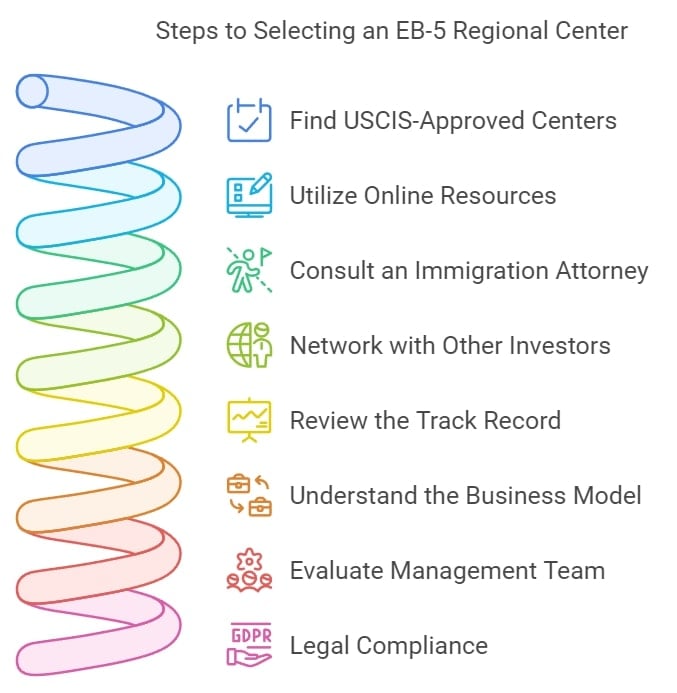
          Steps to Selecting an EB-5 Regional Center

          Here’s how to evaluate a regional center in 2025:

          1. Verify USCIS Approval and Compliance

          • Confirm the center’s current designation and good standing on the USCIS website.
          • Check for recent audits, compliance with Integrity Fund payments, and absence of sanctions or terminations.

          2. Assess Track Record and Financial Health

          • Review I-526 and I-829 approval rates, project completion history, and repayment records.
          • Request detailed financial reports and investor testimonials.

          3. Evaluate Management and Transparency

          • Speak directly with center principals to gauge expertise, decision-making, and responsiveness.
          • Ensure the center provides regular updates and clear documentation.

          4. Understand Project Structure and Exit Strategy

          • Analyze the business model, job creation methodology, and risk management approach.
          • Clarify the exit strategy and timeline for capital return.

          EB-5 Regional Center Compliance and Regulatory Updates

          Staying compliant with evolving regulations is critical for both investors and regional centers.

          Key 2025 Compliance Requirements

          • Annual Integrity Fund Fees: All centers must pay annual fees ($10,000–$20,000) to support program oversight and anti-fraud efforts. Non-payment can result in termination.
          • Enhanced Reporting: Centers must file annual reports (Form I-956G), maintain detailed records, and undergo regular audits.
          • Investor Protections: The RIA ensures that good-faith investors are protected if a center is sanctioned, but non-compliance can still jeopardize applications.
          • Transparency: Centers must disclose project details, risks, and financials to investors, supporting informed decision-making.

          How to Choose the Right EB-5 Regional Center: Step-by-Step

          Selecting the right regional center is a multi-step process. Here’s a concise roadmap:

          1. Confirm USCIS approval and compliance history.
          2. Use online resources to compare centers by location, industry, and performance.
          3. Consult an experienced immigration attorney for legal and financial due diligence.
          4. Network with other investors for firsthand insights.
          5. Review the center’s track record of project approvals and job creation.
          6. Understand the business model and risk management strategies.
          7. Evaluate the management team’s experience and reputation.
          8. Check for legal or regulatory issues.
          9. Clarify the exit strategy for your investment.

          For more on evaluating EB-5 investment options, see the EB-5 visa investment options guide.

          Common Questions

          In Conclusion

          EB-5 regional centers offer a powerful, passive route to U.S. residency, but success depends on careful selection, due diligence, and compliance with evolving regulations. By following the steps and insights in this guide, you can confidently navigate the EB-5 landscape and move closer to your American dream.

          For a comparison of affordable global investment migration options, visit the cheapest citizenship by investment programs.

          Disclaimer: This article is for informational purposes only. Investment amounts and regulations are subject to change. Always consult with a qualified immigration professional before making investment decisions.

        • Citizenship by Investment Explained: Basics, Benefits & Global Options

          Citizenship by Investment Explained: Basics, Benefits & Global Options

          Citizenship by Investment (CBI) is a strategic pathway for individuals and families seeking a second passport, enhanced global mobility, and access to new economic opportunities. As CBI programs evolve in 2025, understanding the fundamentals, benefits, and latest trends is essential for making informed, secure decisions. This guide delivers expert-backed, up-to-date insights to help you navigate the world of citizenship by investment.

          For a comprehensive overview of global CBI options, visit the WorldPassports citizenship by investment hub.

          Key Takeaways

          • CBI grants legal nationality in exchange for a significant economic contribution, such as real estate, government bonds, or business investment.
          • Benefits include visa-free travel, asset protection, and tax advantages, with programs tailored to attract foreign capital and stimulate economic growth.
          • Alternatives to CBI include residency by investment, naturalization, and ancestry-based citizenship.

          Did you know that the number of people actively seeking to purchase a second passport has increased by 50% over the past 5 years? 

          Citizenship by investment programs offer a unique opportunity to obtain a second passport and a host of additional benefits such as enhanced global mobility, greater financial security, better educational and business opportunities, and access to world-class healthcare facilities. 

          However, citizenship by investment can be quite complex, as each program has its own unique set of rules, requirements, and application procedures. 

          In This Article, You Will Discover:

            To help you, our WorldPassports team has compiled a comprehensive guide to citizenship by investment, including answers to some of your most pressing questions. 

            So, let’s jump in and explore the world of citizenship by investment…

            What Is Citizenship by Investment?

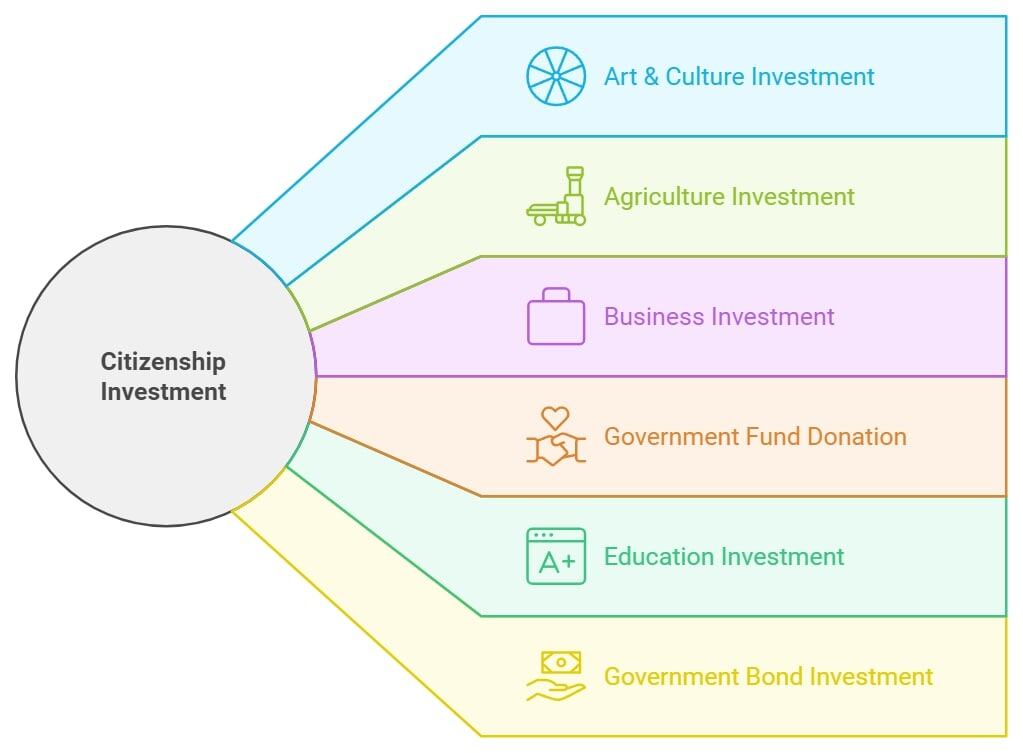
            Citizenship by Investment is a legal process that allows individuals to acquire a second citizenship by making a qualifying investment in a host country. This investment can take several forms, including:

            • Real estate purchases
            • Government bonds
            • Donations to national development funds
            • Business creation or expansion

            Once approved, applicants and their immediate family members receive citizenship, unlocking a host of personal and financial benefits.

            How Can You Understand Citizenship by Investment?

            How Does CBI Differ from Residency by Investment?

            While CBI grants full citizenship and a passport, residency by investment (RBI) offers temporary or permanent residency status without immediate citizenship.

            RBI is often a stepping stone to citizenship, but the requirements, timelines, and benefits differ significantly. For a detailed comparison, see the citizenship by investment explained guide.

            Why Choose Citizenship by Investment?

            CBI programs are increasingly popular among high-net-worth individuals seeking security, flexibility, and opportunity.

            Benefits of Citizenship by Investment

            Here’s why:

            Enhanced Global Mobility

            • Visa-free or visa-on-arrival access to 100+ countries, depending on the program.
            • Freedom to travel for business, education, or leisure without frequent visa applications.

            Business and Investment Opportunities

            • Access to new markets and international banking.
            • Improved business reputation and credibility on the global stage.

            Education and Healthcare Benefits

            • Eligibility for world-class schools and universities in the new country.
            • Access to advanced healthcare systems for the entire family.

            Security and Asset Protection

            • Safe haven in times of political or economic instability.
            • Diversification of assets and protection from home-country risks.

            Tax Planning Advantages

            • Potential for lower personal and corporate taxes in favorable jurisdictions.
            • Access to global tax planning strategies and structures.

            For a breakdown of the pros and cons, visit the CBI pros and cons guide.

            A Brief History of Citizenship by Investment

            The concept of economic citizenship dates back centuries, but modern CBI programs began in the 1980s with St. Kitts and Nevis. Since then, dozens of countries have launched their own initiatives, each with unique requirements and benefits. Today, CBI is a global industry, with programs in the Caribbean, Europe, the Middle East, and beyond.

            What’s the History of Citizenship by Investment?

            Types of Citizenship by Investment Options

            Countries offer a variety of investment routes to qualify for citizenship. The most common include:

            • Real estate investment
            • Government bonds
            • National development fund donations
            • Business enterprise or job creation
            • Bank-term deposits
            • Investment funds
            • Lump sum tax payments

            Each program has its own minimum investment thresholds, processing times, and due diligence requirements. For a comparison of affordable options, see the cheapest citizenship by investment programs.

            Why Do Countries Offer Citizenship by Investment?

            Governments introduce CBI programs to:

            • Attract foreign direct investment and boost economic growth.
            • Fund infrastructure, healthcare, and education projects without increasing taxes.
            • Create jobs and stimulate key sectors such as real estate and tourism.
            • Enhance global competitiveness by attracting talented individuals and entrepreneurs.

            Alternatives to Citizenship by Investment

            If CBI isn’t the right fit, consider these alternative routes to foreign citizenship:

            • Citizenship by ancestry or descent
            • Residency by investment (Golden Visas)
            • Citizenship by marriage or naturalization
            • Citizenship for exceptional talent or contribution
            • Dual nationality and non-habitual residency programs

            Each pathway has unique eligibility criteria and timelines, so research is essential.

            Paths to Foreign Citizenship

            The CBI landscape is evolving rapidly in 2025. Key trends include:

            • Stricter due diligence and transparency: Countries are tightening background checks to maintain program integrity and international reputation.
            • Rising minimum investment thresholds: Popular programs in Europe and the Caribbean are increasing their requirements to attract higher-quality applicants.
            • Focus on sustainable development: Many countries now direct CBI funds toward green projects, infrastructure, and social programs.
            • Growing demand from emerging markets: Interest is surging among investors from Asia, Africa, and the Middle East, driving program innovation and competition.

            How to Choose the Right Citizenship by Investment Program

            Selecting the best CBI program requires careful consideration of your goals, budget, and family needs. Here’s how to make an informed choice:

            1. Define Your Objectives

            • Is your priority global mobility, tax planning, or family security?
            • Do you need access to specific countries or regions?

            2. Compare Program Requirements

            • Minimum investment amounts
            • Processing times and approval rates
            • Inclusion of family members

            3. Assess Country Reputation and Stability

            • Political and economic stability
            • International relations and visa-free access

            4. Seek Professional Guidance

            Common Questions

            In Conclusion

            Citizenship by Investment is a powerful tool for global mobility, security, and opportunity. By understanding the latest trends, investment options, and program requirements, you can make a confident, informed decision for your future. For more insights and the latest updates, explore the WorldPassports citizenship by investment hub.

            Disclaimer: This article is for informational purposes only. Investment amounts and regulations are subject to change. Always consult with a qualified immigration professional before making investment decisions.

          • Digital Nomad Visa: Work and Travel Redefined

            Digital Nomad Visa: Work and Travel Redefined

            In This Article, You Will Discover:

              Key Takeaways

              • A Digital Nomad Visa allows individuals who work remotely using telecommunications technologies to live in a foreign country.
              • Countries offering Digital Nomad Visas include Estonia, Barbados, Croatia, and Bermuda, among others.
              • Requirements typically involve proving a stable income, health insurance coverage, and sometimes a criminal background check.
              • The length of stay allowed varies by country, with some visas lasting for a year and possibly renewable.
              • Benefits include the flexibility to travel and work, exposure to new cultures, and potentially favorable tax arrangements, but limitations may include visa-specific restrictions and the need for health insurance coverage.

              In today’s world, the idea of being a “digital nomad” is more popular than ever. This lifestyle lets you work from anywhere, like on a beach in Bali or in Mexico City. The Digital Nomad Visa is key to this freedom. It’s a special visa offered by some countries to attract remote workers.

              This article will tell you what a Digital Nomad Visa is, its benefits, and which countries offer them.

              What Is a Digital Nomad Visa?

              A Digital Nomad Visa is for remote workers who want to live and work in a new country. It’s different from regular work visas because you can work on your own. You can manage your job or business from anywhere using technology.

              This visa is for digital workers who can do their jobs online. It lets you stay long-term, enjoy tax benefits, and access local services. It’s perfect for IT, marketing, consulting, design, and content creation professionals who can work from anywhere.

              Benefits of a Digital Nomad Visa

              Digital Nomad Visas are popular because they offer many benefits. These include:

              1. Flexibility in Work and Travel

              One big advantage is the freedom to travel while working. Unlike office workers, remote workers can explore the world without long breaks. This lets them experience new cultures and lifestyles.

              2. Tax Benefits

              Many countries offer tax incentives for remote workers. Some give partial or full tax exemptions for a while. This makes these visas great for saving money while exploring a new place.

              3. Long-Term Stay Options

              Digital Nomad Visas allow longer stays than tourist visas. While tourist visas last 30 to 90 days, these visas can last six months to a year. This makes it easier to live and work in a country for a long time.

              4. Work-Life Balance

              Living in a new country can improve your work-life balance. You can choose places with lower costs, better weather, or outdoor activities. This can boost your creativity, mental health, and productivity.

              5. Access to Global Networking Opportunities

              Living abroad gives digital nomads a chance to meet professionals worldwide. Networking in a new place can lead to business opportunities, collaborations, and career growth. It enriches both your personal and professional life.

              Countries Offering Digital Nomad Visas

              Many countries now offer special visas for digital nomads. These visas are designed for remote workers. Here are some top places for digital nomads:

              1. Estonia

              Estonia is a digital hub and was one of the first to offer a Digital Nomad Visa. This visa lets remote workers stay for up to a year. Estonia is also known for its e-Residency program, which lets entrepreneurs manage their businesses remotely.

              • Requirements: Proof of employment, a minimum income of €3,504 per month, and valid health insurance.
              • Benefits: Access to Estonia’s efficient digital services, a thriving start-up ecosystem, and a vibrant local expat community.

              2. Barbados

              Barbados has the Barbados Welcome Stamp program. It lets remote workers live and work there for up to a year. The country offers stunning beaches, a welcoming culture, and a stable infrastructure.

              • Requirements: Proof of income, health insurance, and employment or business ownership.
              • Benefits: A tropical island lifestyle, lower cost of living, and access to a growing digital nomad community.

              3. Portugal

              Portugal offers a D7 Visa for digital nomads. This visa lets remote workers live in Portugal while earning income abroad. Portugal is loved for its mild climate, rich history, and affordable living.

              • Requirements: Proof of income from foreign sources and accommodation.
              • Benefits: Access to Europe’s Schengen Area, a relaxed lifestyle, and the chance to explore nearby countries.

              4. Croatia

              Croatia introduced its Digital Nomad Visa in 2021. The country is famous for its beautiful coastline, relaxed lifestyle, and lower cost of living.

              • Requirements: Proof of remote employment, health insurance, and a minimum income of HRK 16,907 per month (about $2,700).
              • Benefits: Ability to stay in Croatia for up to a year with the option for renewal, and the chance to explore a stunning part of Europe.

              5. Dubai (UAE)

              Dubai launched the Virtual Working Program. It allows digital nomads to live and work in Dubai for up to a year. Dubai is a global business hub known for its modern infrastructure, business-friendly environment, and tax advantages.

              • Requirements: Proof of remote employment or business ownership, a minimum monthly salary of $5,000, and health insurance.
              • Benefits: Access to world-class facilities, low taxes, and a bustling cosmopolitan environment.

              6. Mexico

              Mexico offers a Temporary Resident Visa for digital nomads. This visa allows for a stay of up to four years. Mexico is attractive due to its proximity to the U.S., affordable living, and vibrant culture.

              • Requirements: Proof of income of approximately $1,620 per month or a bank balance of $27,000 over the past six months.
              • Benefits: Affordable healthcare, a vibrant cultural scene, and access to diverse landscapes.

              How to Apply for a Digital Nomad Visa?

              Applying for a Digital Nomad Visa is a bit different in each country. But, there are some common steps you’ll need to follow:

              1. Check Eligibility: First, make sure you meet the country’s requirements. You might need to show proof of work, have a certain income, and have health insurance.
              2. Submit Application: You’ll usually apply online or in person at a consulate or embassy. You’ll need to provide documents like proof of income, your passport, and health insurance.
              3. Wait for Approval: Waiting for approval can take a few weeks to months, depending on the country.
              4. Enjoy Your Stay: After approval, you can start your digital nomad journey. Enjoy the freedom of working from anywhere.

              Conclusion

              The Digital Nomad Visa is a great option for remote workers. It lets you travel the world while keeping your job. These visas offer the chance to live and work in places with great lifestyles, tax benefits, and cultures.

              Whether you want to work from the beaches of Barbados, the streets of Lisbon, or Dubai’s business centers, the Digital Nomad Visa has you covered. As more countries support digital nomads, this lifestyle is changing how we work, travel, and grow personally.

            • What Are the Top Countries Offering Digital Nomad Visas?

              What Are the Top Countries Offering Digital Nomad Visas?

              Key Takeaways

              • Estonia, Barbados, and Croatia are known for having favorable Digital Nomad Visa conditions, offering a blend of lifestyle and administrative ease.
              • Conditions and requirements vary, including minimum income thresholds, insurance requirements, and application fees.
              • Costs associated with these visas can range from minimal application fees to required proof of significant monthly income.
              • To attract them, countries offer robust internet infrastructure, a welcoming community, and support services.
              • They can apply through designated government portals, with some countries requiring an application process that includes documentation of employment or business ownership.

              With the influx of new countries offering Digital Nomad Visas since the pandemic, you may find it tricky to keep up with all the country-specific changes. 

              In This Article, You Will Discover:

                So, to help you make an informed decision, we at WorldPassports have worked diligently to compile the complete country-specific guide for your next Digital Nomad Visa in 2026.

                Keep reading to find out more about countries offering Digital Nomad Visas….

                What is a Visa?

                A visa is an official authorization granted by a country’s government that allows a foreigner to enter, stay, or leave that country for a specified period.

                Visas may be required for various purposes such as tourism, business, study, or employment.

                The type of visa needed depends on the purpose of the visit and the immigration laws of the destination country.

                What is a Digital Nomad?

                A digital nomad is an individual who leverages digital technology to work remotely and live a location-independent lifestyle.

                Digital nomads often use the internet to perform their job tasks, allowing them the flexibility to work from anywhere in the world.

                They may travel frequently or reside in different places for extended periods while maintaining their professional engagements.

                Digital nomads are not tied to a specific physical office and often choose destinations based on factors like cost of living, quality of life, and personal preferences.

                Which European Countries Offer Digital Nomad Visas?

                Countries in Europe are offering more and more Digital Nomad Visas. 

                Some of these fall under different categories, such as Freelance or Remote Working Visas, whilst others are Digital Nomad Visas. 

                So, let’s jump right in.

                How Can You Obtain a Digital Nomad Visa in Spain?

                Spain began introducing and accepting applications for its Digital Nomad Visa at the beginning of 2023. 

                With this visa, digital nomads can live in Spain as long as they work for a company outside of Spain. 

                While finer details are still awaiting confirmation, the visa may allow digital nomads to reside in Spain for up to 5 years. 

                What Are the Visa Requirements and Benefits in Portugal for Nomads?

                Portugal has released its Portugal Temporary Stay Visa, which is open for digital nomads to apply for. 

                For a period of up to a year, this visa entitles digital nomads to live and work in Portugal before they can apply for permanent residency. 

                Alternative visa options for digital nomads include:

                • The D7 Passive Income Visa.
                • The D2 Entrepreneur Visa.

                What Does Italy Offer for Digital Nomad Visa Applicants?

                As of March 2022, Italy launched its Digital Nomad Visa, which is designed for non-EU digital nomads and highly qualified remote workers to live and work in Italy for a foreign-registered company.

                Additionally, Italy offers a Self-Employment Visa, which authorises holders to live and work in the country for up to 1 year. 

                How to Apply for a Croatian Digital Nomad Visa?

                Since Croatia introduced its Digital Nomad Visa in early 2021, it’s rapidly become a hot destination for digital nomads. 

                It offers a Digital Nomad Residence Permit, which allows digital nomads to live and work in the country for 6 to 12 months. 

                Please note

                Since Croatia joined the Schengen Zone, American tourists on tourist visas are limited in how long they can visit and stay in the country. 

                This makes Croatia’s Digital Nomad Visa an attractive choice for American citizens who want to work and stay in Croatia for longer. 

                What Are the Costs of a Digital Nomad Visa in Estonia?

                Estonia was the first country to introduce an e-Visa for individuals with businesses registered online in the EU. 

                Currently, it offers a Digital Nomad and Freelance Visa, which allows digital nomads to live in the country and work remotely for up to 1 year. 

                Why Choose Malta for Your Digital Nomad Visa?

                The island of Malta offers a 6-month Digital Nomad Visa, which may be extended to a 1-year Nomad Residence Permit. 

                This visa is offered for digital nomads who own or work for an overseas registered company. 

                Malta also offers 2 alternative visa options for digital nomads with its Short Stay Visa and Long Stay Visa. 

                What Are the Best American Countries for Digital Nomad Visas?

                North, Central, and South America have become well-loved destinations amongst the digital nomad community, with significantly more countries introducing Digital Nomad Visas since the pandemic.  

                What Benefits Do Costa Rica’s Digital Nomad Visas Offer?

                Costa Rica offers one of the easiest and most accessible Digital Nomad Visas in the world. 

                This visa allows successful applicants to live and work for 12 months, with the opportunity to extend for another 12 months.

                Additionally

                Costa Rica’s Digital Nomad Visa offers incredible tax exemptions for overseas income utilities, as well as other incentives. 

                How Does Mexico Support the Work and Travel Lifestyle?

                Mexico is another popular digital nomad hotspot, that boasts rich Latin-American culture and an abundance of wildlife and biodiversity. 

                Whilst it doesn’t offer a Digital Nomad Visa, it does offer a Temporary Residential Visa, permitting successful applicants to live in the country for 1 to 3 years on the condition that they work for a foreign registered company. 

                What Are Panama’s Application Processes for Digital Nomad Visas?

                With Panama being one of Central America’s most economically and socially stable countries, boasting a welcoming climate and high standard of living, it has become a frequented destination for digital nomads. 

                As of March 2021, the country offers a short-term, 9-month Digital Nomad Visa, which can be renewed for another 9 months. 

                Why Is Belize a Popular Destination for Digital Nomads?

                Belize is quickly emerging as a popular digital nomad destination.

                The country offers a Digital Nomad Visa known as the Work Where You Vacation Long-Stay Program, which allows digital nomads to live and work in the country for 1 year. 

                Unlike other countries, this unique program comes with advantages such as a working permit, a student permit for your children, and special deals on accommodation and recreational activities to make the most of your time in the country.  

                What Remote Work Opportunities Does Colombia Provide?

                The city of Medellín is widely regarded as one of the digital nomad hubs of the world. 

                As of April 2022, Colombia released a Digital Nomad Visa for employees working for a foreign registered company.

                This visa permits successful applicants to live and work in the country for up to 2 years. 

                How to Navigate Brazil’s Digital Nomad Visa Requirements?

                Brazil was the first South American nation to introduce a Digital Nomad Visa, known as the RN 45 Visa. 

                This visa authorises digital nomads to live and work in the country for 1 year, with the possibility of extending to up to 4 years. 

                However

                Since the pandemic, this Digital Nomad Visa has become increasingly difficult to obtain. 

                Can Argentina Be Your Next Digital Nomad Base?

                Every year, Argentina has flocks of digital nomads that make this country their home. 

                As of 2026 Argentina doesn’t offer a Digital Nomad Visa, and instead, offers a 6-month Temporary Visa which can only be extended once for an additional 6 months.

                However, in June 2021, Buenos Aires, Airbnb, and other local accommodations collaborated to create numerous packages aimed at attracting digital nomads to their country. 

                Which Middle East and Asian Countries Offer Digital Nomad Visas?

                Asian countries have long been regarded as a favourite destination for the travelling digital nomad. 

                Middle Eastern countries are also growing in popularity amongst digital nomads for being commercially developed and rich in culture. 

                What Makes Bali an Ideal Digital Nomad Destination?

                The province of Bali, Indonesia, has garnered much popularity amongst the digital nomad community for its sandy beaches and exquisite food. 

                Indonesia offers a Social and Cultural Visa, known as the Vista Visa B211A, which permits digital nomads to stay in the country for 60 days and can be renewed twice (totalling 180 days).

                Thereafter, you may apply for the B211A Business Visa onshore, which permits digital nomads a visa extension for an additional 180 days.

                This makes it possible for digital nomads to stay and work in Bali for a total of 1 year. 

                How to Secure a Digital Nomad Visa in Thailand?

                Thailand has long been regarded as one of the most popular digital nomad destinations, with the city of Chiang Mai widely regarded as the digital nomad hub of the world. 

                Thailand introduced a Long-Term Digital Nomad Visa shortly after the pandemic, which permits digital nomads to reside and work in the country for up to 10 years. 

                However

                The requirements for this Digital Nomad Visa are extremely tight and difficult to pass, so most digital nomads opt for the Tourist Visa, which permits you to stay for 60 days and can be extended for an additional 30 days. 

                What Are the Advantages of Dubai’s Digital Nomad Visa?

                Dubai has rapidly emerged to become one of the world’s most commercially developed cities, boasting a diverse ex-pat community and rich culture. 

                The Emirate offers a Remote Working Visa Scheme, which allows digital nomads to live and work in the city for 1 year and experience similar rights to residents. 

                Why Should Digital Nomads Consider Malaysia?

                In October 2022, Malaysia launched its De Rantau Nomad Pass, permitting digital nomads to stay and work in Malaysia for 12 months, which can be extended for an additional 12 months. 

                What Does Taiwan Offer for Digital Nomads?

                Taiwan is one of the top-rated countries for ex-pats and international workers, making it an ideal destination for digital nomads.

                Whilst Taiwan does not offer a Digital Nomad Visa, many digital nomads take advantage of the country’s Employment Gold Card Visa, which permits productive international workers to live and work in the country for 1 to 3 years. 

                Which Caribbean Islands Have Digital Nomad Visas?

                The Caribbean has joined the digital nomad trend, with numerous countries introducing Digital Nomad Visas and incentives to lure digital nomads to live and work in paradise. 

                How to Apply for Barbados’ Digital Nomad Visa?

                Barbados is a popular destination in the Caribbean, known for its beauty, low cost of living, and safety. 

                In June of 2022, Barbados introduced its Barbados Welcome Stamp, which is aimed at attracting foreign workers to their shores. 

                Whilst it’s not designed specifically for digital nomads, the Barbados Welcome Stamp permits foreign workers to live and work in the country for 1 year. 

                Additionally

                The visa permits access for children and pets too!

                What Are Bermuda’s Digital Nomad Visa Benefits?

                The Work From Bermuda visa program was introduced for digital nomads, remote workers, and remote students in June 2020. 

                This Digital Nomad Visa is aimed at attracting digital nomads and remote workers to work and stay on the island for up to 1 year.

                 It also permits successful applicants to enter and exit the country of their own accord. 

                Why Choose Dominica for Your Remote Work Lifestyle?

                The Commonwealth of Dominica, similarly to Bermuda, launched its Work In Nature Visa Program in April 2022. 

                This Long-Stay Visa offers digital nomads the opportunity to live and work on the Caribbean Island for up to 18 months. 

                This visa also includes numerous incentives, such as discounts from service providers and duty-free products. 

                What Can Digital Nomads Expect in the Cayman Islands?

                The Cayman Islands’ Global Citizen Concierge Program (GCCP) is the most extensive Digital Nomad Visa in the world, permitting successful applicants to live and work on the island for up to 2 years. 

                The visa allows holders to freely enter and exit the country, and offers applicants the opportunity to apply with their families. 

                What African Countries Offer Digital Nomad Visas?

                Africa is one of the latest continents to join the digital nomad boom. However, they are catching up quickly, with countries such as South Africa introducing digital nomad visas and incentives to draw in more remote workers. 

                How Does South Africa Support Digital Nomads?

                To make up for the decline in tourism and the economy caused by the pandemic, South Africa introduced a Digital Nomad Visa in April 2022. 

                South Africa’s Digital Nomad Visa permits successful applicants to live and work in the country for 90 days, with the possibility of an extension for up to 1 year. 

                But wait, there’s more!

                In 2021, the City of Cape Town was voted as the top location for remote working and has recently indicated plans to further attract digital nomads1.

                What Are the Perks of Choosing Mauritius for Your Nomad Visa?

                The island off the northern coast of Madagascar is home to one of the simplest visa application processes for digital nomads in the world. 

                Mauritius offers a Premium Travel Visa, which permits digital nomads to live and work remotely on the island for up to one year, and can be renewed. 

                The application fee is also free, and it allows you to apply with your significant other. 

                Why Is Seychelles a Top Choice for Digital Nomads?

                Seychelles has a booming digital nomad community thanks to its Workation Program. 

                The Workation Program permits digital nomads and ex-pats to live and work in the nation for up to 1 year. 

                Please note

                Upon acceptance, applicants may only book from a list of registered accommodations provided by the Workaction Program. 

                What to Know About Namibia’s Digital Nomad Visa?

                In October of 2022, Namibia opened its borders to digital nomads by introducing the Namibian Digital Nomad Visa. 

                This visa allows digital nomads to reside and work for an overseas registered business for 6 months, which may be extended for an additional 6 months. 

                How Can You Benefit from a Digital Nomad Visa in Cabo Verde?

                Cabo Verde is the final country offering Digital Nomad Visas on our list. 

                The archipelago introduced its Cabo Verde Remote Working Visa early in December 2020. 

                The visa permits digital nomads to live and work in the country for 6 months, which may be renewed for an additional 6 months. 

                Common Questions

                In Conclusion

                We at WorldPassports hope we’ve helped you choose the right destination for your next journey. 

                With the list of countries introducing Digital Nomad Visas ever-growing and changing, be sure to check in again with us to stay up-to-date with the latest countries offering Digital Nomad Visas!

              • What’s an E-2 Visa: Understanding the Basics

                What’s an E-2 Visa: Understanding the Basics

                In This Article, You Will Discover:

                  Key Takeaways

                  • The E-2 Treaty Investor Visa allows nationals of treaty countries to be admitted to the United States when investing a substantial amount of capital in a U.S. business.
                  • Requirements include a substantial investment in a bona fide enterprise and intent to direct and develop the business.
                  • Qualifying businesses vary widely but must meet certain criteria to ensure the investment is substantial and the business is legitimate.
                  • The duration of stay is typically 2 years, but it can be extended indefinitely in increments of two years.
                  • Family members, including spouses and children under 21, can accompany E-2 visa holders, with spouses also eligible to apply for work authorization.

                  What Is an E-2 Visa?

                  The E-2 “Treaty Investor” visa is available to individuals from countries that have a relevant treaty of commerce and navigation with the United States. It enables these investors—and certain key employees—to enter and work in the U.S. based on a substantial investment in a U.S. business. The E-2 does not directly lead to permanent residency (green card), but can be renewed indefinitely as long as the business remains active.

                  Eligibility and Core Requirements

                  To qualify for the E-2 visa, applicants must meet the following requirements:

                  • Nationality: Be a citizen of a country with which the U.S. maintains an E-2 treaty.
                  • Investment: Make a substantial investment (typically $100,000–$300,000, but no formal minimum) in an active, operating U.S. business.
                  • Ownership/Control: Own at least 50% of the business or have operational control via a managerial position.
                  • Active Role: Be entering the U.S. solely to develop and direct the investment enterprise (owners/managers or essential employees with the same nationality as the investor company).
                  • Marginality: The business must not be marginal; it should generate more than enough income to support the investor and their family or have a significant economic impact on the U.S.
                  • Funds at Risk: Investment funds must be fully committed and at risk—not just in a bank account or speculative assets.
                  • Lawful Source of Funds: Funds must be traced to legal sources and must be the investor’s own.
                  • Proof of Intent to Depart: The applicant must intend to leave the U.S. when E-2 status ends.

                  Step-by-Step Application Process

                  1. Confirm Treaty Country Eligibility

                  Check if your country maintains an E-2 treaty with the United States.

                  2. Establish or Acquire a Business

                  Invest a substantial amount in a new or existing U.S. company. Draft a detailed business plan and ensure funds are transferred and committed.

                  3. Prepare Documentation

                  Gather evidence of business ownership, proof of funds, investment contracts, company formation/incorporation documents, and a comprehensive business plan.

                  4. Complete and File Forms

                  • If applying from outside the U.S.: Complete DS-160 (visa application) and DS-156E (treaty investor application), then pay the $315 processing fee plus any country-specific reciprocity fees.
                  • If applying from inside the U.S.: File Form I-129 for a change of status or extension.

                  5. Submit Application and Attend Interview

                  • Submit documentation to the U.S. consulate (abroad) or USCIS (in the U.S.).
                  • Attend a mandatory interview; discuss your business, investment amount, source of funds, and your role.

                  6. Receive Visa and Travel

                  If approved, receive a visa stamp (up to five years depending on treaty country). At entry, U.S. Customs and Border Protection may grant two years of initial stay; extensions are possible.

                  Required Documents Checklist

                  • Valid passport, color copy of bio-data page
                  • Completed DS-160, DS-156E (or I-129 in U.S.)
                  • Proof of nationality of treaty country
                  • Proof of business ownership (incorporation, share certificates)
                  • Evidence of substantial investment (bank statements, wire transfers, purchase receipts)
                  • Comprehensive business plan
                  • Business licenses and registrations
                  • Proof of lawful source and control of funds
                  • Proof of funds at risk (receipts, contracts, invoices)
                  • Lease agreements or property contracts (if applicable)
                  • Organizational chart, payroll, employee tax filings (for renewals)
                  • Resume and background documents
                  • Photographs meeting U.S. requirements
                  • Payment confirmation of all required fees

                  Benefits and Drawbacks

                  Benefits

                  • No set minimum investment: The investment must be “substantial,” tailored to the business type—commonly above $100,000.
                  • Unlimited Renewals: E-2 can be extended indefinitely, provided business remains viable.
                  • Family Inclusion: Spouses (who may work freely) and children under 21 (may study) can receive E-2 dependent visas.
                  • Global Mobility: Easy to travel in and out of the U.S. while status is valid.
                  • Quick Processing: Consular applications or premium processing (for changes/extensions) complete in as little as 30 days.

                  Drawbacks

                  • No direct path to green card: E-2 is not a dual-intent visa; applicants must seek a different category for U.S. permanent residency.
                  • Country Restrictions: Only citizens of specific treaty countries are eligible.
                  • Tied to the Business: Status is linked to the continued success of the investment; business failure means loss of visa.
                  • Limited Employment Flexibility: Can only work for the E-2 business.
                  • Children Age Out: Dependents lose status at 21 and must change visas to remain.

                  E-2 vs. Other Investor Visas

                  FeatureE-2 VisaEB-5 Visa
                  Minimum InvestmentNo fixed minimum; typically $100k–$300k$800,000–$1,050,000
                  NationalityTreaty country requiredOpen to all nationalities
                  Path to Green CardNo direct pathDirect path to permanent residency
                  Job CreationIndirect; jobs recommended10 full-time U.S. jobs required
                  RenewalsUnlimitedN/A (green card permanent)
                  Family InclusionSpouse/children <21; spouse may workSpouse/children <21

                  Common Questions

                  In Conclusion

                  The E-2 visa is a dynamic solution for entrepreneurs seeking to operate their own U.S. business without a multi-million-dollar investment. It allows indefinite stay renewals, global mobility, and family status—but does not offer a direct path to permanent residency and is only available to select nationalities. Full documentation, a clear business plan, and long-term investment strategy are essential for success.

                  Disclaimer: This guide is accurate as of July 2025. U.S. immigration rules and consular practices change frequently—always consult official sources or a qualified immigration attorney before applying.

                • Breaking Down Costs: Citizenship By Investment

                  Breaking Down Costs: Citizenship By Investment

                  Key Takeaways

                  • Investing in Government Bonds offers a secure method within some citizenship programs, guaranteeing returns after a fixed duration.
                  • This method attracts individuals looking for a conservative approach, typically posing less risk than alternatives like real estate or businesses.
                  • Such investments necessitate locking in a substantial capital amount for a set term, often between five and seven years.
                  • The simplicity and direct support to government financing are key attractions of bond investments.
                  • Though less prevalent than real estate or donations, this route offers stability and low risk for prospective citizens.

                  WorldPassports has compiled a comprehensive guide to the costs involved in citizenship by investment to help you make informed financial decisions.

                  Citizenship by investment programs offer several benefits, such as access to better economic, social, and educational opportunities, increased travel freedom, and financial flexibility. 

                  However, these benefits tend to come with numerous significant costs.

                  In some instances, investors’ costs can escalate to hundreds of thousands of U$$*.

                  In This Article, You Will Discover:

                    *Please note: All amounts mentioned in this article were correct at the time of publication and are subject to change. 

                    Read on to find out more about the costs you should watch out for when investing in a new citizenship

                    What Are The Costs Associated With Citizenship By Investment?

                    Citizenship by investment programs provide individuals with the opportunity to obtain a second citizenship through a financial contribution to a country’s economy.

                    The costs associated with citizenship by investment can vary depending on the country and the specific program.

                    Typically, applicants are required to make a significant investment in the form of a donation to a government fund, purchasing real estate, or investing in government-approved businesses.

                    Breakdown of Citizenship by Investment Costs

                    Additionally, there are administrative fees, due diligence fees, and legal expenses that need to be taken into account.

                    The total costs can range from a few hundred thousand dollars to several million, depending on the country and the level of benefits offered.

                    It is important to note that the costs associated with citizenship by investment also include other non-financial factors.

                    These may include fulfilling certain eligibility criteria, such as a clean criminal record, having a good reputation, and meeting specific residency or language requirements.

                    Applicants may also need to factor in the costs of maintaining their new citizenship, such as taxes, annual fees, and potential travel expenses.

                    It is crucial to carefully consider all the costs and requirements associated with citizenship by investment before making a decision, and seek professional advice to ensure a smooth and successful application process.

                    Why’s It Important to Understand the Costs Involved in Citizenship by Investment? 

                    It’s important to understand the costs involved in citizenship by investment so that you can know and be better prepared for the expenses you’ll incur. 

                    Understanding the various costs involved with this investment will help you make an informed decision about whether the program is suitable for your budget and investment objectives.

                    When investing in citizenship by investment, you’ll need to be aware of specific fees such as application fees, due diligence fees, processing fees, and investment amounts. 

                    Understanding Citizenship by Investment Costs

                    In addition

                    Each CBI program has different requirements and fees, so it’s essential to do thorough research in advance and compare the costs of various programs so that you can choose the one that best suits your financial capabilities.

                    In doing so, you’ll avoid being caught off guard by unexpected financial burdens or hidden costs and will be well prepared to make financially sound and informed investment decisions. 

                    Overall, understanding the costs involved in citizenship by investment will give you the confidence to make educated decisions that align with your investment and citizenship objectives. 

                    What Investment Costs Are Involved in Citizenship by Investment?

                    The investment costs involved in citizenship by investment depend on the type of investment made, which includes options like an agriculture investment, a business investment, and real estate investment. 

                    To qualify for any citizenship by investment program, you’ll be required to make a significant investment in the country’s economy. 

                    As an investor interested in citizenship by investment programs, it’s critical that you’re well-informed of the associated costs before committing.

                    Your primary cost will comprise of your investment in your chosen country, which will change depending on the specific CBI program and type of investment you’ve chosen.

                    What Investment Costs Are Involved in Citizenship by Investment

                    So let’s take a closer look at the specific types of investments you can make to qualify for CBI programs and what they entail:  

                    Art & Culture Investment

                    This option involves investing in a cultural project, such as a museum, art gallery, or cultural center, that benefits the country’s cultural development. 

                    The amount required to invest in this option may vary depending on the specific project but can range between US$100,000 and US$200,000.

                    Agriculture Investment

                    This option involves investing in agriculture or farming within the country.

                    The required investment amounts range from US$200,000 to US$300,000.

                    Business Investment

                    This option involves investing in a local business or creating a new business within the country.

                    The investment amount can vary depending on the type of business and its expected impact on the country’s economy.

                    Donation to a Government Fund or Project 

                    This investment option requires applicants to make a non-refundable donation to the government or an approved project. 

                    The required amount can vary from US$100,000 to US$250,000.

                    Education Investment  

                    Education investment involves investing in education projects such as private schools, universities, or research institutions. 

                    The required investment amount for this option can range from US$200,000 to US$300,000  based on the size and expected impact of the education project.

                    Government Bond Investment

                    This option involves investing in government bonds, which usually come with a lower return on investment, but investors can typically recoup their investment after a set period of time. 

                    The approximate cost can range from US$100,000 to US$250,000.

                    Investment Fund 

                    This option involves investing in a government-approved fund that aims to improve economic development within the country. 

                    The approximate cost can range between US$100,000 and US$200,000.

                    Real Estate Investment 

                    This option involves investing in an approved real estate project within the country for a specific duration.

                    The approximate cost can range from US$200,000 to US$400,000.

                    Share or Partnership Investment 

                    This option involves investing in a business, existing or new.

                    The investment amount for a shareholder or partner in an existing business or a new business can vary depending on the nature of the business and its expected impact on the country’s economy.

                    Tourism Investment

                    This option involves investing in a tourism project such as a hotel, resort, or other related activities.

                    The investment amount ranges between US$200,000 and US$300,000.

                    What Citizenship by Investment Legal Fees Can I Expect to Pay?

                    The investment legal fees that you can expect to pay include fees payable to immigration lawyers, local lawyers, and notaries. 

                    Legal fees are a significant cost component of citizenship by investment programs. 

                    The specific legal charges may include lawyer fees, document translation fees, and other fees associated with visa applications or passport processing. 

                    By thoroughly understanding the legal fees involved in the process and planning appropriately, you may avoid any financial surprises down the line and ensure your citizenship acquisition process is legally above board. 

                     Citizenship by Investment Legal Fees

                    Here is a breakdown of each legal cost:

                    Immigration Lawyers

                    Immigration lawyers specialize in the legal aspects of immigrating to a specific country. 

                    They provide legal advice on immigration policies, help prepare visa applications, and represent their clients during the application process. 

                    The legal fees for immigration lawyers can vary greatly depending on the lawyer’s experience and the scope of the work required. 

                    Fees can range from US$3,000 to US$7,000 for a comprehensive service.1

                    Local Lawyers

                    Local lawyers provide legal assistance in the country where you, as an investor, wish to obtain citizenship. 

                    They help clients navigate legal requirements and advise on the legal compliance of their investments. 

                    The legal fees for local lawyers will depend on the scope of work required and the country’s fee structure. Fees typically range between US$2,500 and US$10,000.

                    Notaries

                    Notaries are important for certifying documents as legally valid. 

                    They’re necessary for authenticating documents required for citizenship applications, such as birth certificates, passports, and national IDs.

                    Notary fees can vary based on the geographical location of the notary public.

                    Fees generally differ based on the document’s complexity and number of pages, ranging from US$10 to US$50 per document.

                    Specific Fees if Investing in Real Estate 

                    When investing in real estate as part of a citizenship by investment program, it’s important to remember that there will be additional fees associated with your transaction, namely stamp duty and transfer fees. 

                    Here’s a breakdown of each fee and its approximate cost:

                    Stamp Duty

                    The government imposes a tax known as stamp duty on specific types of documents to make them official. 

                    In the case of real estate transactions, stamp duty is payable when a property’s title is transferred to a new owner. 

                    The cost of stamp duty varies depending on the country where the real estate is located and the property’s purchase price. 

                    Take note

                    In some cases, stamp duty may be waived or reduced for citizenship by investment program participants. 

                    The cost of stamp duty can range between 1% and 10% of the property’s purchase price.

                    Transfer Fees 

                    Transfer fees are administrative fees charged by the government agency responsible for processing the property transfer. 

                    The transfer fees vary by country and can range between 1% and 3% of the property’s purchase price.

                    What Government Fees Are Associated with Citizenship by Investment?

                    The government fees associated with citizenship by investment include application processing fees, due diligence fees, and legal representation costs.

                    Citizenship by Investment Fee Cycle

                    Let’s take a closer look at each government fee:

                    Government Fees Associated with Different Investment Routes

                    The government fees for citizenship by investment programs can vary significantly depending on the type of investment you make, as each investment option comes with different legal and processing requirements. 

                    In addition, government fees for the CBI program you’ve chosen will also vary significantly based on the country. 

                    Therefore, it’s essential to understand the fees and plan accordingly when choosing an investment option and country.

                    Application Processing Fees 

                    Processing fees are an essential part of any citizenship by investment program, covering costs related to reviewing applications and conducting necessary checks. 

                    The fees required for processing can vary significantly based on the program and the number of applicants.

                    For instance:

                    Programs such as the United States EB-5 program charge processing fees ranging from US$17,795 to US$27,495 per application, while other programs may charge fees ranging from US$20,000 to US$30,000. 

                    Therefore, it’s vital for you to understand the exact cost of processing fees, as they can play a significant role in deciding which program to choose, and recognizing them can help you budget your investment accordingly.

                    Due Diligence Fees 

                    Due diligence fees play an essential role in citizenship by investment programs as they’re used to thoroughly investigate an investor’s background and source of wealth, ensuring they meet the program’s standards. 

                    The fees for due diligence services can vary between countries, with some charging as little as US$5,000 and others asking as much as US$15,000 per person. 

                    For instance:

                    The United Kingdom charges £1,623 (approximately US$2,227) in due diligence fees for its investor route program, while Dominica charges US$7,500 per person.2 

                    Understanding these costs and their importance will help you plan accordingly and make informed investment decisions.

                    Passport & Citizenship Fees

                    Passport processing fees are an essential part of any citizenship by investment program. 

                    After becoming a citizen, acquiring a passport that allows you to travel internationally is necessary. 

                    The exact fees for passports can vary depending on the country where they are issued. 

                    For instance:

                    Caribbean countries charge passport fees ranging from US$250 to US$1,500, depending on the specific country.3

                    In Europe, Portugal charges US$90 for a standard passport and US$103 for an expedited visa. 

                    What Additional Costs Should I Plan for in My Citizenship by Investment Process?

                    The additional costs you should plan for in your citizenship by investment process include taxes, travel costs, and translation services. 

                    These costs can significantly affect your budget, and it’s crucial that you plan accordingly to avoid any financial strain. 

                    What Additional Costs Should I Plan for in My Citizenship by Investment Process?

                    Here are details about the main additional costs you should be aware of when applying for a citizenship by investment program:

                    Taxes

                    Taxes can be a significant additional cost for you as an investor considering a citizenship by investment program. 

                    Depending on the country’s policies, you may be required to pay taxes on your worldwide income, which can significantly impact your budget plan.

                    For instance, in Portugal, investors who become tax residents will be subject to personal income tax rates ranging from 14.5% to 48%.4 

                    In addition 

                    Tax policies can change with time, and you should remain up-to-date with any updates that may affect your investment plans.

                    It’s crucial to understand the tax implications of your chosen CBI program to budget and plan accordingly.

                    Travel Costs

                    Travel costs associated with citizenship by investment programs can be a significant expense that many investors overlook when creating a budget plan. 

                    Once you’ve obtained your citizenship, traveling to the host country is a common requirement of the process

                    You should specifically take into account the cost of transportation, lodging, and meals, which vary significantly.

                    It’s vital that you budget for these travel costs early to avoid any last-minute financial surprises and to ensure you have a successful investment plan.

                    Translation Services

                    Translation services are an important service that you may require when investing in a citizenship program, particularly if you’re not fluent in the country’s native language. 

                    The cost of translation services can be significant, ranging from a few hundred dollars to thousands of dollars, depending on the language’s complexity and the duration of the services. 

                    Therefore, it’s crucial to incorporate language translation costs into your investment budget.

                    How Can I Avoid Unforeseen Costs in Citizenship by Investment?

                    There are a few ways in which you can avoid unforeseen costs when applying for citizenship by investment.

                    Here’s a list of options:

                    • Conduct thorough research on the citizenship by investment program before investing to avoid surprises.
                    • Consult with professionals to get a clear breakdown of all fees and any possible additional costs.
                    • Develop a well-planned budget and have a clear understanding of the program’s requirements.
                    • Maintain communication with program agents to know of any changes or additional costs that may arise.

                    Common Questions

                    In Conclusion

                    With all the citizenship by investment programs available to you, we understand that it may feel overwhelming and maybe even impossible to consider everything, particularly when there are hidden and additional costs and substantial sums at stake. 

                    We’re confident that this article, which our team of experts has put together, will help you confidently begin your citizenship by investment journey and successfully navigate its costs. 

                  • Safety First: Is Citizenship By Investment Safe?

                    Safety First: Is Citizenship By Investment Safe?

                    In This Article, You Will Discover:

                      Key Takeaways

                      • Citizenship by investment programs are generally safe, provided they are managed by reputable countries that have stringent due diligence processes and legal frameworks in place to protect investors and the integrity of the program.
                      • Due diligence typically involves thorough background checks, including financial, criminal, and security checks conducted by international agencies to ensure applicants do not pose a risk to the country’s national security or have involvement in illicit activities.
                      • Citizenship obtained can be revoked if the applicant is found to have provided false information, engaged in fraudulent activity, or committed a serious crime, highlighting the importance of transparency throughout the application process.
                      • Risks include changes in governmental policies affecting citizenship status or investment value, economic and political instability in the host country, and potential challenges in recouping the investment.
                      • To ensure your investment for citizenship is safe, conduct thorough research on the host country’s program, work with reputable and government-approved agents, understand the legal and financial implications of your investment, and consider the stability and economic prospects of the country.

                      In 2026, the allure of citizenship by investment remains strong, offering affluent individuals a pathway to global mobility and new opportunities. 

                      However, recent developments have cast a shadow over the safety and legitimacy of these programs; notably, the European Court of Justice ruled Malta’s ‘golden passport’ scheme illegal, citing violations of EU law and concerns over commodifying citizenship. This decision underscores the increasing scrutiny and potential risks associated with such programs.

                      For those considering this route, it’s crucial to understand the evolving legal landscape and the implications of recent rulings, and our comprehensive guide will help you understand just that.

                      Continue reading to explore the complexities of CBI and determine whether it’s the right choice for you…

                      What Is Citizenship by Investment (CBI)?

                      Citizenship by Investment (CBI) is a legal process whereby individuals can obtain citizenship in a foreign country by making a substantial financial contribution, typically through investment in real estate, government bonds, or national development funds.

                      Here’s what you need to know:

                      What Is Citizenship by Investment?

                      Citizenship by Investment (CBI) is a legal process allowing individuals to acquire a second nationality in exchange for a significant financial contribution to a country’s economy; this usually involves real estate investment, government bonds, or a donation to a national development fund.

                      CBI programs offer fast-track naturalization, with some countries granting passports in as little as 3–6 months, and unlike traditional immigration, there’s often no residency or language requirement.

                      Countries offering CBI typically undergo due diligence checks to verify the applicant’s background, source of funds, and criminal record.

                      Key benefits of CBI include:

                      1. Visa-free travel to 100+ countries.
                      2. Access to tax advantages in certain jurisdictions.
                      3. Greater global mobility and security for investors and their families.

                      How Do CBI Programs Operate Globally?

                      CBI programs are offered by a limited number of countries – mostly in the Caribbean, Europe, and the Pacific – and each has its own criteria, investment thresholds, and processing times.

                      Applications are processed by a citizenship unit or ministry, often through licensed agents. Governments conduct multi-tiered background checks, sometimes using third-party firms, before approval.

                      Globally, CBI faces increased scrutiny from the EU and OECD, pushing for more transparency and tighter due diligence to prevent misuse.

                      Popular CBI destinations include:

                      1. St. Kitts and Nevis: Minimum $250,000 donation or $400,000 real estate investment.
                      2. Dominica: From $100,000 donation or $200,000 real estate.
                      3. Malta: Offers naturalization after 12–36 months with investment starting at €738,000.

                      Programs are typically structured around one or more of the following:

                      1. Non-refundable government contributions.
                      2. Investment in approved real estate projects.
                      3. Creation of businesses or job opportunities.

                      How Safe Are CBI Programs?

                      CBI programs are generally safe when administered by reputable jurisdictions with strict due diligence processes, though the level of protection varies depending on the country and its regulatory enforcement.

                      Consider these risks:

                      What Are the Common Risks Associated with CBI?

                      Citizenship by Investment (CBI) programs carry several risks, both for applicants and host countries; a main concern is the potential for misuse, including money laundering, tax evasion, or passport fraud if due diligence is weak.

                      For applicants, risks include:

                      1. Revocation of citizenship if a country later amends its laws or finds irregularities in the application.
                      2. Scams or unlicensed agents offering fake programs or inflated fees.
                      3. Lack of transparency about timelines, processing, or government decisions.

                      For host nations, risks include:

                      1. Damage to international reputation, particularly if passports are granted to individuals with questionable backgrounds.
                      2. Increased pressure from the EU or FATF, which may result in visa restrictions or blacklisting.

                      How Do Countries Mitigate These Risks?

                      Many countries mitigate these risks by choosing to adopt multi-layered due diligence processes; additionally, governments work to ensure regulatory compliance with global standards, including cooperation with AML (Anti-Money Laundering) and CFT (Counter-Terrorism Financing) frameworks.

                      Reputable CBI programs publish transparency reports, enforce strict agent licensing, and review policies regularly to maintain credibility and avoid sanctions.

                      Applications typically undergo:

                      1. Background checks by international security firms.
                      2. Verification of source of funds and financial integrity.
                      3. Screening through INTERPOL, Europol, and global watchlists.

                      Some programs also require:

                      1. Personal interviews or enhanced scrutiny for high-risk applicants.
                      2. Delays or denial powers held by the Prime Minister or a special committee.

                      What Does the Regulatory Landscape Look Like in 2026?

                      The regulatory landscape for CBI in 2026 is increasingly stringent, with heightened international scrutiny, particularly from the EU and OECD, prompting countries to strengthen compliance, transparency, and reporting standards.

                      Think about these legal considerations:

                      What Are the Recent Legal Developments Affecting CBI?

                      In recent years, CBI programs have come under growing legal and political pressure–particularly from the European Union and the United States–with the EU urging countries offering CBI to tighten screening, and in some cases, to wind down their programs entirely.

                      These legal shifts are reshaping the CBI landscape, favoring programs with stronger governance and reputational safeguards.

                      Key developments include:

                      1. Malta’s Individual Investor Programme has been limited, with the EU initiating infringement procedures over concerns of “EU citizenship for sale.”
                      2. Cyprus terminated its CBI scheme in 2020 following corruption scandals and EU scrutiny.
                      3. Caribbean nations like St. Kitts & Nevis, Antigua, and Grenada agreed in 2024 to standardize minimum investment levels and strengthen due diligence under pressure from the U.S. Treasury.

                      New reforms focus on:

                      1. Enhancing background checks and transparency.
                      2. Reducing fast-track pathways seen as too lenient.
                      3. Increasing government oversight of licensed agents and intermediaries.

                      How Do International Bodies Influence CBI Regulations?

                      International bodies significantly influence how CBI programs operate; the European Union, OECD, and Financial Action Task Force (FATF) are particularly active in promoting tighter controls and standardization.

                      These bodies influence national policy through blacklisting or greylisting jurisdictions seen as non-compliant, publishing compliance guidelines and best practices, and applying diplomatic and financial pressure on non-cooperative countries.

                      As a result, compliant programs increasingly emphasize integrity, security, and alignment with global norms to remain viable and credible.

                      These are the ways in which controls are being tightened:

                      1. The EU views CBI as a security risk, especially when non-EU nationals obtain EU mobility through member-state programs. It has called for mandatory suspension of schemes that pose integrity threats.
                      2. The OECD warns that CBI can undermine tax transparency, especially when applicants use citizenships to avoid Common Reporting Standard (CRS) obligations.
                      3. The FATF urges countries to apply rigorous anti-money laundering (AML) standards, pushing for enhanced due diligence and monitoring.

                      What Due Diligence & Security Measures Are in Place?

                      The due diligence and security measures in place for CBI programs include comprehensive background checks, anti-money laundering (AML) screening, and verification of financial sources. 

                      Let’s look closely at the processes in place:

                      What Due Diligence Processes Are in Place for Applicants?

                      Most CBI programs apply multi-tiered due diligence checks to verify the identity, background, and financial standing of applicants, which are all  essential to prevent illegal activity and maintain international trust.

                      In addition to standard checks, many programs also require sworn declarations, police clearance certificates, and enhanced checks for politically exposed persons (PEPs) or applicants from high-risk jurisdictions.

                      Standard processes include:

                      1. Background screening through global databases like INTERPOL, World-Check, and sanctions lists.
                      2. Verification of identity documents, educational records, and previous citizenships.
                      3. Source of funds checks, often involving audits of bank statements, business records, and tax filings.
                      4. Use of third-party due diligence firms, often based in the UK or U.S., to independently investigate applicants.

                      How Effective Are These Measures in Ensuring Program Integrity?

                      Due diligence procedures are generally effective when rigorously applied, and programs that work with international firms and conduct multi-level screening are better positioned to detect fraud or high-risk profiles.

                      For example; Malta and St. Kitts & Nevis are often cited for having among the most stringent CBI checks, including in-person interviews and multi-agency reviews, and reputable programs typically use 4 or more levels of verification.

                      Effectiveness varies, however; past scandals—such as Cyprus granting citizenship to individuals under EU sanctions—highlight that political pressure, poor oversight, or weak enforcement can undermine the system.

                      What Are the Financial Implications of CBI?

                      Financial implications of CBI include a substantial upfront investment, legal and processing fees, and possible ongoing tax obligations depending on the chosen jurisdiction’s policies and your tax residency status.

                      Consider these fees and financial obligations:

                      What Are the Costs Involved in Obtaining Citizenship by Investment?

                      The total cost of obtaining CBI varies significantly by country and investment route, though the minimum threshold typically starts at $100,000, often for a non-refundable donation to a national development fund.

                      Real estate options usually begin around $200,000 to $400,000, though some countries also charge processing, due diligence, and legal fees on top; for example, St. Kitts & Nevis requires a $250,000 donation under its Sustainable Island State Contribution, while Dominica offers a $100,000 donation option but adds fees that raise the final cost.

                      Family size directly affects total cost, with larger households incurring higher charges for each additional dependent.

                      Applicants should also expect to pay for:

                      1. Due diligence checks (often $7,500+ per adult).
                      2. Government application fees ($1,000 to $5,000 per person).
                      3. Legal or agent fees, which can add $10,000 or more depending on complexity.

                      Are There Hidden Financial Risks or Obligations?

                      While most reputable CBI programs are transparent, applicants should be aware of potential hidden financial risks or ongoing obligations; one common risk is maintenance costs tied to real estate investments, such as property taxes, upkeep, or resale restrictions that may lock funds for 5 years or longer.

                      In some cases, exit strategies are limited, meaning the property can’t be sold easily or at full market value. Non-refundable contributions also mean there’s no capital return on part of the investment.

                      Other financial risks include currency exchange fluctuations during cross-border payments, additional fees from unregulated agents or brokers inflating service charges, and future tax implications—especially if the new citizenship creates ties to tax-residency rules or reporting obligations.

                      What Are the Alternatives to Citizenship by Investment?

                      Alternatives to CBI include residency-by-investment (Golden Visas), naturalisation through long-term residence, employment or family-based immigration, and special talent or business visa programmes.

                      These are your options:

                      What Other Residency or Citizenship Options Exist?

                      Beyond CBI, several countries offer Residency by Investment (RBI) programs, often referred to as “Golden Visas.” 

                      These schemes grant long-term residence rights in exchange for qualifying investments—commonly in real estate, business, or government bonds.

                      Popular RBI programs include:

                      1. Portugal’s Golden Visa, offering EU residency with a path to citizenship after 5 years.
                      2. Spain and Greece, which allow property investment for renewable residency.
                      3. The U.S. EB-5 Immigrant Investor Program, granting a green card for a $800,000–$1,050,000 investment tied to job creation.

                      Other options include:

                      1. Naturalization through long-term residence, common in countries like Canada and Australia.
                      2. Citizenship by descent or marriage, often faster and less costly if eligible.
                      3. Special talent-based or exceptional contribution schemes, such as Austria’s discretionary naturalization for notable individuals.

                      How Do These Alternatives Compare in Terms of Safety & Benefits?

                      Residency programs generally offer lower political and reputational risk than direct citizenship schemes, particularly within the EU or OECD countries; additionally, RBI often requires physical presence or integration, making it less prone to international scrutiny than fast-track CBI programs.

                      Safety-wise, RBI programs undergo more rigorous vetting and compliance with EU and FATF standards, offering applicants greater long-term stability and fewer chances of policy reversals.

                      However, CBI typically offers faster timelines (as little as 3–6 months) and full citizenship rights, including visa-free travel and inheritance of status.

                      In contrast

                      RBI requires multi-year commitments, renewal fees, and sometimes permanent relocation. The ideal choice depends on personal goals—whether it’s mobility, long-term relocation, or security of second nationality.

                      Common Questions

                      In Conclusion

                      In 2026, the safety of citizenship by investment depends on careful planning, due diligence, and choosing reputable programmes. 

                      While the benefits can be significant, risks still exist, especially with lesser-known schemes or poor legal guidance, so if you’re thinking of taking the next step, consider partnering with a trusted adviser to navigate the process securely and make a sound investment in your global mobility.

                      To protect your future, prioritise transparency, regulatory compliance, and expert advice. 

                    • Understanding Banned Nationalities in Global Citizenship

                      Understanding Banned Nationalities in Global Citizenship

                      Key Takeaways

                      • Travel may be severely restricted or impossible with a passport from a banned nationality without specific exemptions or visas.
                      • Obtaining a visa can be challenging with a banned nationality passport, often requiring additional documentation or a diplomatic approach.
                      • Various countries impose travel restrictions on certain nationalities, typically based on diplomatic relations or security concerns.
                      • To check if your nationality faces travel bans, consult the official immigration or foreign affairs website of your intended destination country.
                      • Using a passport from a banned nationality for travel can lead to denial of entry, deportation, or other legal consequences.

                      Did you know that some nationalities face restrictions on citizenship by investment (CBI) programs?

                      These programs offer a unique opportunity for individuals to invest in a country’s economy in exchange for citizenship. 

                      However, some people may not be eligible to apply. 

                      In This Article, You Will Discover:

                        Are you ready to unravel the motivations behind nationality exclusions and learn how they may impact aspiring CBI investors?

                        Read on to find out more…

                        Which Nationalities Are Banned From Entering Certain Countries?

                        One example is the United States, which has implemented travel restrictions on citizens from several countries including Iran, Libya, Somalia, Syria, Yemen, North Korea, and Venezuela.

                        These restrictions vary in scope, from full travel bans to certain limitations depending on the country of origin.

                        Similarly, Australia has imposed bans on individuals from specific countries, such as Afghanistan, Iraq, and North Korea, for security reasons.

                        These restrictions aim to protect national security while acknowledging the unique circumstances of each nation.

                        Additionally, some countries have placed travel bans on specific nationalities due to political or diplomatic reasons.

                        For instance, Saudi Arabia does not allow entry to citizens of Israel, as the two countries do not have diplomatic relations.

                        Similarly, Qatar has banned citizens of several Arab countries including Saudi Arabia, Egypt, Bahrain, and the United Arab Emirates due to ongoing political disputes.

                        These bans highlight the intricate web of international relations and the impact they have on travel permissions.

                        Top 5 Reasons for the Banning of Certain Nationalities from CBI Programs

                        As you dive into the world of citizenship by investment, you might be curious to find out why some countries restrict certain nationalities from accessing their citizenship programs. 

                        Reasons for Nationality Bans in CBI Programs

                        Below, we’ll take a closer look at the 5 major reasons causing CBI programs to ban certain nationals from applying. 

                        Geopolitical Factors

                        Geopolitical factors play a significant role in determining which nationalities are banned from CBI programs. 

                        These factors may include political tensions, historical conflicts, or diplomatic disputes between countries. 

                        Take note

                        Banning certain nationalities may be necessary to maintain the host country’s foreign policy interests and protect its relationships with other nations. 

                        However, this approach has emerged as a result of complex global politics and has been criticized for unfairly penalizing individuals based on their nationality rather than their personal actions or qualifications.

                        Security & Risk Assessment

                        Security concerns and risk assessment are major reasons for banning specific nationalities from participating in citizenship by investment programs

                        Host countries need to ensure that new citizens don’t pose any threat to national security or public safety. 

                        Banning certain nationalities may be deemed necessary due to concerns about terrorism, organized crime, or other security risks associated with a particular country. 

                        Economic & Financial Concerns

                        Economic and financial concerns also contribute to nationality bans in CBI programs. 

                        Host countries may exclude certain nationalities if they believe that granting citizenship to individuals from those countries may negatively impact their economy or financial stability. 

                        Such decisions may be necessary to protect a host country’s economic interests or prevent money laundering, tax evasion, and other financial crimes. 

                        This approach has emerged as an approach to safeguarding a country’s financial and economic well-being. 

                        Compliance With International Regulations & Sanctions

                        Host countries must comply with international regulations and sanctions when implementing citizenship by investment programs. 

                        If a country faces sanctions or restrictions from international bodies such as the United Nations or the European Union, it may ban its citizens from participating in CBI programs.

                        This approach has emerged as countries seek to maintain their international standing and avoid penalties. 

                        However

                        Critics have argued that this may result in collectively punishing entire nations for the misdeeds of individuals.

                        Reputation Management & Public Perception

                        Lastly, reputation management and public perception can also influence a host country’s decision to ban certain nationalities from CBI programs. 

                        Granting citizenship to individuals from countries with negative reputations or controversial backgrounds may tarnish the host country’s image or create a public backlash. 

                        Most countries strive to maintain a positive international reputation and attract high-quality investors. 

                        Which Countries Are Banned from Applying for Citizenship by Investment Programs?

                        Now that we’ve explored the reasons behind nationality bans in citizenship by investment, we’ll delve into the specific countries affected by these restrictions. 

                        Citizens of a certain country are either eligible, ineligible with exceptions, or ineligible to apply for a citizenship by investment program.

                        We’ve compiled a comprehensive list of all the banned nationalities for each CBI program. 

                        Applicant OriginAntigua & BarbudaDominicaGrenadaMaltaSt. Kitts & NevisSaint LuciaTürkiyeVanuatuEgyptJordanCambodia
                        AfghanistanIneligible*EligibleEligibleIneligibleIneligibleEligibleEligibleEligibleEligibleEligibleEligible
                        ArmeniaEligibleEligibleEligibleEligibleEligibleEligibleIneligibleEligibleEligibleEligibleEligible
                        BelarusEligibleIneligibleEligibleIneligibleIneligibleIneligibleEligibleEligibleEligibleEligibleEligible
                        CubaEligibleEligibleEligibleEligibleIneligibleEligibleIneligibleEligibleEligibleEligibleEligible
                        DR CongoEligibleEligibleEligibleIneligibleEligibleEligibleEligibleEligibleEligibleEligibleEligible
                        IranIneligible*EligibleIneligibleIneligibleIneligibleIneligibleEligibleIneligible*EligibleEligibleEligible
                        IraqEligibleIneligible*EligibleEligibleEligibleEligibleEligibleIneligible*EligibleEligibleEligible
                        NigeriaEligibleEligibleEligibleEligibleEligibleEligibleIneligibleEligibleEligibleEligibleEligible
                        North KoreaIneligible*Ineligible*EligibleIneligibleIneligibleEligibleIneligibleIneligible*EligibleEligibleEligible
                        RussiaIneligibleIneligibleEligibleIneligibleIneligibleIneligibleEligibleEligibleEligibleEligibleEligible

                        Austria’s Citizenship by Investment Program

                        As of 2026, Austria’s citizenship by investment program remains open to applicants from all nationalities, without any specific restrictions. 

                        By not restricting any nationalities from applying, Austria demonstrates its commitment to fostering a multicultural and welcoming environment for potential investors and their families.

                        Antigua & Barbuda’s Citizenship by Investment Program

                        Antigua and Barbuda’s CBI program has specific restrictions in place for certain nationalities.1 

                        Banned countries include:

                        • Afghanistan: Banned due to security concerns and unstable political situations.
                        • Iran: Banned due to international sanctions and concerns over money laundering and terrorism financing.
                        • North Korea: Banned due to international sanctions and concerns over money laundering and terrorism financing.
                        • Russia: Banned due to geopolitical factors and concerns about financial crimes.
                        • Somalia: Banned due to security concerns, terrorism financing, and unstable political situations.
                        • Sudan: Banned due to international sanctions, terrorism financing, and unstable political situations.
                        • Yemen: Banned due to security concerns, terrorism financing, and unstable political situations.

                        Antigua and Barbuda’s citizenship program restrictions reflect the country’s commitment to global security and international legal compliance.

                        Dominica’s Citizenship by Investment Program

                        Dominica’s citizenship program also imposes restrictions on particular nationalities.2 

                        We’ve listed banned countries below:

                        • Belarus: Banned due to concerns over human rights violations, political instability, and potential financial crimes.
                        • Russia: Banned due to geopolitical factors and concerns about financial crimes, such as money laundering and corruption.
                        • North Korea: Banned due to international sanctions and concerns over money laundering and terrorism financing.
                        • Northern Iraq: Banned due to security concerns, ongoing conflicts, and the presence of terrorist organizations in the region.
                        • Sudan: Banned due to international sanctions, terrorism financing, and unstable political situations.

                        Dominica’s nationality restrictions prioritize security and adherence to international regulations.

                        Grenada’s Citizenship by Investment Program

                        As of 2026, Grenada hasn’t explicitly listed any banned nationalities from participating in its citizenship by investment program

                        Jordan’s Citizenship by Investment Program

                        Similarly to Grenada and Austria, Jordan’s citizenship by investment program hasn’t formally announced any restrictions for applicants to this program.

                        Malta’s Citizenship by Investment Program

                        Malta’s CBI program enforces restrictions on certain nationalities. 

                        We’ve summarized the 7 banned nationalities below:

                        • Afghanistan: Banned due to security concerns and unstable political situations.
                        • DR Congo: Banned due to security concerns and unstable political situations.
                        • Iran: Banned due to international sanctions and concerns over money laundering and terrorism financing.
                        • North Korea: Banned due to international sanctions and concerns over money laundering and terrorism financing.
                        • Russia: Banned due to geopolitical factors and concerns about financial crimes.
                        • Somalia: Banned due to security concerns, terrorism financing, and unstable political situations.
                        • South Sudan: Banned due to security concerns and unstable political situations.
                        • Sudan: Banned due to international sanctions, terrorism financing, and unstable political situations.
                        • Syria: Banned due to ongoing conflict and security concerns in the region.
                        • Venezuela: Banned due to political instability and economic concerns.
                        • Yemen: Banned due to security concerns, terrorism financing, and unstable political situations.

                        Malta’s nationality restrictions reflect its commitment to maintaining a secure and reputable program.

                        North Macedonia’s Citizenship by Investment Program

                        North Macedonia doesn’t impose nationality restrictions on applicants for its CBI program. 

                        This means that the only eligibility requirements for this program include:

                        • Being over the age of 18 years old 
                        • A clean criminal background
                        • Financial capacity
                        • Have entered the country via legal routes 

                        Learn More: The CBI Program in North Macedonia

                        St. Kitts & Nevis’ Citizenship by Investment Program

                        St. Kitts and Nevis’ CBI program bans certain nationalities.3 

                        These banned countries include:

                        • Afghanistan: Banned due to security concerns and unstable political situations.
                        • Cuba: Banned due to geopolitical factors and international sanctions.
                        • Iran: Banned due to international sanctions and concerns over terrorism financing and money laundering.
                        • North Korea: Banned due to international sanctions and concerns over terrorism financing and money laundering.
                        • Russia: Banned due to geopolitical factors and concerns about financial crimes.

                        St. Kitts and Nevis’ CBI program restrictions demonstrate the country’s dedication to global security and compliance.

                        St. Lucia’s Citizenship by Investment Program

                        St. Lucia’s CBI program also has nationality restrictions in place. 

                        The banned countries are:

                        • Iran: Banned due to international sanctions and concerns regarding terrorism financing and money laundering.
                        • Russia: Banned due to geopolitical factors and concerns about financial crimes.

                        St. Lucia’s nationality restrictions prioritize security and cooperation with international regulations.

                        Turkey’s Citizenship by Investment Program

                        Turkey’s CBI program also enforces restrictions on certain nationalities. 

                        Countries banned from applying for Turkey’s CBI program include:

                        • Armenia: Banned due to longstanding geopolitical tensions with Turkey.
                        • Cuba: Banned due to geopolitical factors and international sanctions.
                        • North Korea: Banned due to international sanctions and concerns over money laundering and terrorism financing.
                        • Nigeria: Banned due to security concerns and financial crime risks.
                        • Syria: Banned due to ongoing conflict and security concerns in the region.

                        Turkey’s nationality restrictions showcase the country’s commitment to global security and compliance.

                        Read More: The CBI Program in Turkey

                        Vanuatu’s Citizenship by Investment Program

                        Vanuatu’s citizenship program also enforces restrictions on certain nationalities. 

                        The banned countries include:

                        • Iran: Banned due to international sanctions and concerns regarding terrorism financing and money laundering.
                        • Iraq: Banned due to security concerns and unstable political situations.
                        • North Korea: Banned due to international sanctions and concerns over money laundering and terrorism financing.
                        • Yemen: Banned due to security concerns, terrorism financing, and unstable political situations

                        What Resources & Strategies Can Help Overcome Nationality Restrictions?

                        Navigating the complex landscape of nationality restrictions in citizenship by investment programs can be a major challenge for many aspiring investors. 

                        Resources & Strategies Can Help Overcome Nationality Restrictions

                        Luckily, it’s not all doom and gloom. 

                        In this section, we’ll walk you through the 2 main resources and strategies that can help you overcome these limitations and successfully pursue the opportunities offered by CBI programs. 

                        Take a look:

                        Legal Avenues for Bypassing Nationality Bans

                        There are viable legal avenues to bypass certain CBI nationality restrictions.

                        Various options are available to help applicants bypass bans while adhering to the laws and regulations of their respective countries.

                        Here are a few legal avenues to explore: 

                        • Residency by investment: Instead of directly applying for citizenship, individuals can first obtain residency in a country through investment. After meeting the residency requirements and spending a certain amount of time in the country, they can then apply for naturalization, which may help bypass nationality bans in CBI programs.
                        • Dual citizenship: Obtaining dual citizenship from a country without nationality restrictions can be another way to bypass bans. Once an individual holds citizenship from a country that isn’t restricted, they can apply for a second citizenship using their new nationality.
                        • Renunciation of citizenship: In some cases, individuals may choose to renounce their original citizenship to overcome nationality restrictions. This option should be considered carefully, as it may have significant consequences and may not always guarantee acceptance into a CBI program.
                        • Spousal or family sponsorship: If an individual has a spouse or family member who’s a citizen of a country without nationality restrictions, they can apply for citizenship through family sponsorship. This can potentially help them bypass nationality bans in CBI programs.
                        • Humanitarian or exceptional circumstances: In rare cases, countries may make exceptions to nationality restrictions based on humanitarian grounds or other exceptional circumstances. Applicants must provide strong evidence and reasoning for such consideration, and the decision ultimately lies at the discretion of the respective authorities.

                        By understanding the intricacies of immigration laws and identifying the most suitable route, you can give yourself the best chance to overcome nationality-based restrictions. 

                        Working With Immigration Experts, Lawyers, & Consultants

                        Partnering with or working with experienced professionals in the field of immigration can also assist you in overcoming nationality restrictions. 

                        Professionals such as immigration experts, lawyers, and consultants possess the knowledge and expertise to help applicants navigate the intricacies of CBI restrictions effectively. 

                        What’s more

                        These professionals can provide valuable insights, assist in preparing the necessary documentation, and recommend the most appropriate strategies tailored to the specific needs of each applicant.

                        In essence, working with experts in the field not only simplifies the process but can also enhance the chances of your CBI application despite nationality restrictions. 

                        Common Questions

                        In Conclusion

                        Understanding and addressing nationality restrictions in citizenship by investment programs is essential for individuals seeking a second citizenship. 

                        By exploring legal avenues and collaborating with immigration experts, applicants can navigate these challenges and enhance their chances of success. 

                        The WorldPassports team trusts that our comprehensive article has shed some light on the intricacies of geopolitical and international restrictions on citizenship by investment programs.